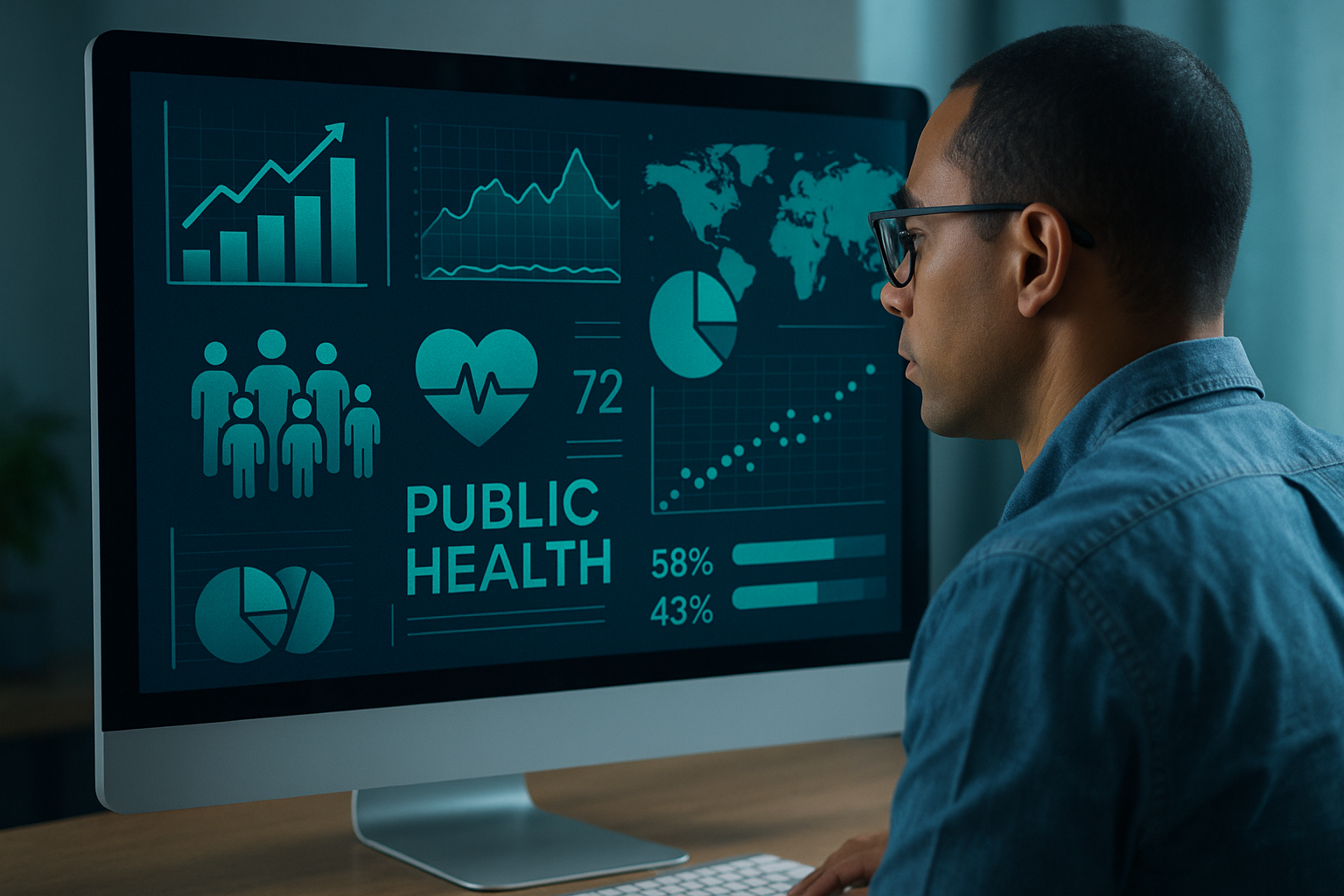
In an era where every click, search, and interaction generates data, public health campaigns can no longer rely solely on intuition and traditional methods. Data analytics has emerged as a powerful force multiplier, transforming how we design, implement, and evaluate health interventions. From predicting disease outbreaks to personalizing health messages, analytics is reshaping the landscape of public health communication and making campaigns more effective, efficient, and equitable.
The shift toward data-driven public health isn’t just about having more numbers—it’s about gaining actionable insights that save lives, optimize resources, and reach people who need help most. This article explores how healthcare professionals and marketing teams can harness data analytics to create public health campaigns that truly make a difference.
The Evolution of Data in Public Health
Public health has always been fundamentally data-driven. John Snow’s famous 1854 cholera map, which identified a contaminated water pump as the source of an outbreak, represents one of the earliest examples of using data visualization to inform public health action. However, the volume, velocity, and variety of data available today dwarf anything previous generations could have imagined.
Modern public health campaigns operate in a data-rich environment where information flows from electronic health records, social media platforms, mobile devices, environmental sensors, genomic databases, and countless other sources. The CDC’s Data Modernization Initiative exemplifies this evolution, aiming to transform how public health data is collected, shared, and used to protect communities.
This abundance of data presents both unprecedented opportunities and significant challenges. The question is no longer whether data exists but rather how to extract meaningful insights from the digital deluge and translate those insights into effective interventions.
Core Applications of Data Analytics in Public Health Campaigns
Data analytics strengthens public health campaigns across multiple dimensions, from strategic planning through execution and evaluation:
Population Segmentation and Targeting: One of analytics’ most powerful applications is identifying and characterizing population segments that require targeted interventions. Traditional demographic segmentation—dividing populations by age, gender, or geography—provides only a surface-level understanding. Advanced analytics enables much more sophisticated segmentation based on behavioral patterns, health risks, social determinants, and engagement preferences.
Machine learning algorithms can analyze vast datasets to identify clusters of individuals with similar characteristics, health behaviors, or risk profiles. For instance, a smoking cessation campaign might use predictive analytics to identify which smokers are most ready to quit, which face the greatest barriers, and what messages or interventions would resonate with each group. This precision targeting maximizes campaign efficiency by directing resources where they’ll have the greatest impact.
The New York City Department of Health’s data analytics approach demonstrates this principle in action. By analyzing neighborhood-level health data, social determinants, and healthcare access patterns, they’ve designed interventions specifically tailored to communities with the greatest needs, from diabetes prevention in high-risk neighborhoods to asthma management in areas with poor air quality.
Predictive Modeling for Proactive Intervention: Rather than simply responding to health problems after they emerge, analytics enables public health professionals to anticipate challenges before they escalate. Predictive models analyze historical patterns, current trends, and multiple risk factors to forecast future health outcomes at both population and individual levels.
During flu season, for example, predictive models can analyze search query data, pharmacy sales, school absenteeism rates, and climate patterns to forecast outbreak intensity and geographic spread weeks in advance. This foresight allows health departments to pre-position resources, adjust messaging, and implement preventive measures before hospitalizations surge. Google’s Flu Trends pioneered this approach, demonstrating that search behavior could predict flu activity faster than traditional surveillance systems.
Predictive analytics also enables identification of individuals at highest risk for specific conditions. By analyzing factors like medical history, genetic markers, lifestyle behaviors, and social determinants, algorithms can flag people who would benefit most from screening, early intervention, or intensive case management. This proactive approach shifts public health from reactive treatment toward genuine prevention.
Real-Time Campaign Monitoring and Optimization: Traditional public health campaigns often operated in the dark, with evaluation occurring only after campaigns concluded. Analytics has fundamentally changed this paradigm, enabling real-time monitoring and dynamic optimization throughout campaign lifecycles.
Digital campaign platforms generate continuous streams of data on message reach, engagement, click-through rates, conversions, and countless other metrics. Analytics dashboards provide instant visibility into what’s working and what isn’t, allowing rapid course corrections. If a particular message generates high engagement among young adults but falls flat with older populations, campaigns can quickly pivot, testing alternative approaches until they find what resonates.
A/B testing—systematically comparing different campaign elements to determine what performs best—has become standard practice. Public health marketers can test different headlines, images, calls-to-action, or messaging frames, using statistical analysis to identify the most effective options. This iterative, evidence-based approach continuously improves campaign performance.
The Truth Initiative’s antismoking campaigns exemplify data-driven optimization. By continuously monitoring social media engagement, website analytics, and youth smoking rates, they’ve refined their messaging to maintain relevance with each new generation of young people, adapting tone, platforms, and creative approaches based on what data reveals about audience preferences.
Behavioral Insights and Message Personalization: Generic, one-size-fits-all health messages rarely achieve maximum impact. Analytics enables personalization at scale, tailoring messages to individual characteristics, preferences, and contexts.
By analyzing behavioral data, campaigns can deliver the right message through the right channel at the right time. Someone who regularly exercises but has poor dietary habits might receive nutrition-focused messages, while someone struggling with physical activity receives exercise motivation. Messages can adapt based on time of day, location, recent behaviors, or current health status.
Natural language processing and sentiment analysis of social media conversations reveal how different communities talk about health issues, what concerns they express, and what language resonates. This linguistic intelligence ensures campaign messages use familiar, culturally appropriate language rather than clinical jargon that alienates target audiences.
Personalization extends beyond message content to delivery mechanisms. Analytics can determine whether someone prefers text messages, emails, app notifications, or social media engagement, then deliver personalized health content through preferred channels. This respect for individual preferences increases engagement and effectiveness.
Social Network Analysis and Influencer Identification: Health behaviors don’t occur in isolation—they’re deeply influenced by social networks and community norms. Social network analysis uses data to map connections between individuals and identify influential nodes within networks.
By understanding network structure, public health campaigns can identify opinion leaders whose behavior changes ripple through entire communities. Rather than trying to reach every individual directly, campaigns can strategically engage influential community members who organically spread health messages through their networks.
Research has shown that obesity, smoking, and other health behaviors spread through social networks much like infectious diseases. A landmark study in the New England Journal of Medicine demonstrated that a person’s likelihood of becoming obese increased by 57% if they had a friend who became obese. Understanding these network effects allows campaigns to leverage social influence for positive behavior change.
Social media platforms provide unprecedented visibility into network structures and information flow. Analytics tools can identify which accounts have genuine influence (based on engagement, not just follower counts), track how health information spreads, and even predict which messages are likely to go viral. This intelligence guides influencer partnerships and message amplification strategies.
Data Sources Powering Public Health Analytics
The effectiveness of analytics depends fundamentally on the quality and diversity of underlying data sources:
Electronic Health Records (EHRs): EHRs contain detailed clinical information about diagnoses, treatments, outcomes, and patient characteristics. When aggregated and anonymized appropriately, EHR data provides invaluable insights into disease prevalence, treatment patterns, healthcare utilization, and population health trends. However, data quality issues, interoperability challenges, and privacy regulations complicate EHR analytics.
Claims and Administrative Data: Health insurance claims, Medicaid/Medicare data, and hospital discharge records offer comprehensive population-level views of healthcare utilization, costs, and outcomes. These datasets are particularly valuable for understanding healthcare access disparities and evaluating intervention cost-effectiveness.
Syndromic Surveillance Systems: These systems collect pre-diagnostic data from emergency departments, urgent care centers, and other sources to detect disease outbreaks rapidly. By monitoring symptom patterns rather than confirmed diagnoses, syndromic surveillance provides early warning of emerging health threats.
Social Media and Digital Platforms: Platforms like Twitter, Facebook, Reddit, and health-focused forums contain rich information about health beliefs, behaviors, misinformation spread, and public sentiment. Social listening tools analyze these conversations to understand community concerns, identify emerging health trends, and gauge campaign message reception. However, researchers must account for selection bias, as social media users aren’t representative of entire populations.
Mobile Health Applications and Wearables: Fitness trackers, health apps, and wearable devices generate continuous streams of data on physical activity, sleep patterns, heart rate, and other health metrics. This granular behavioral data provides unprecedented insights into daily health behaviors and enables highly personalized interventions. The All of Us Research Program is building one of the world’s largest health databases by collecting data from diverse sources, including wearables.
Environmental and Geospatial Data: Air quality sensors, climate data, built environment characteristics, and geographic information systems (GIS) help public health professionals understand how environmental factors influence health outcomes. Mapping disease incidence against environmental exposures can reveal important causal relationships and identify high-risk areas requiring intervention.
Survey and Self-Report Data: Traditional survey methods remain valuable, especially when integrated with other data sources. Tools like the Behavioral Risk Factor Surveillance System (BRFSS), conducted by the CDC, provide state-level data on health behaviors, chronic conditions, and preventive service use. Modern survey platforms enable rapid data collection and analysis.
Pharmacy and Retail Data: Prescription fills, over-the-counter medication sales, and retail purchasing patterns can signal health trends and campaign effectiveness. Increased purchases of nicotine replacement therapy following a smoking cessation campaign, for instance, provides tangible evidence of behavioral impact.
Advanced Analytics Techniques Transforming Public Health
Beyond basic descriptive statistics, sophisticated analytical methods are unlocking deeper insights:
Machine Learning and Artificial Intelligence: Machine learning algorithms can detect patterns in complex datasets that human analysts would miss. These techniques excel at prediction, classification, and pattern recognition across enormous, multidimensional datasets.
Supervised learning algorithms can predict health outcomes based on known risk factors, while unsupervised learning discovers hidden patterns and previously unknown risk factor clusters. Deep learning neural networks can analyze medical images, predict hospital readmissions, and identify patients at risk for specific conditions with remarkable accuracy.
Natural language processing (NLP) algorithms can extract structured information from unstructured text in medical records, research literature, and social media. Sentiment analysis gauges emotional tone in public health discussions, while topic modeling identifies emergent themes in health conversations.
Geographic Information Systems (GIS) and Spatial Analysis: Mapping health data geographically reveals spatial patterns that inform targeted interventions. Hot spot analysis identifies areas with disproportionately high disease rates, while spatial regression models examine relationships between geographic factors and health outcomes.
GIS enables sophisticated visualization of health disparities, showing how factors like poverty, environmental hazards, and healthcare access cluster geographically. These visualizations are powerful advocacy tools for directing resources to underserved communities. The CDC’s Social Vulnerability Index uses GIS to map community resilience factors, helping health departments identify neighborhoods that need extra support during public health emergencies.
Time Series Analysis and Forecasting: Understanding temporal patterns—daily, weekly, seasonal, and long-term trends—is essential for public health planning. Time series analysis techniques decompose health data into trend, seasonal, and irregular components, enabling more accurate forecasting.
ARIMA models, exponential smoothing, and other forecasting methods predict future disease incidence, healthcare demand, and resource needs. These predictions inform everything from vaccine ordering to staff scheduling. During the COVID-19 pandemic, epidemiological models incorporating time series analysis helped predict case surges and guided policy decisions, though their limitations also became apparent.
Network Analysis: Graph theory and network science methods map and analyze relationships between individuals, organizations, or concepts. In public health, network analysis identifies key influencers, traces disease transmission pathways, and reveals how health information spreads through communities.
Centrality measures identify the most connected or influential nodes in networks, while community detection algorithms reveal tightly connected subgroups. This intelligence informs targeted intervention strategies and identifies optimal entry points for introducing health messages into communities.
Causal Inference Methods: Observational health data is abundant, but distinguishing correlation from causation remains challenging. Causal inference techniques like propensity score matching, instrumental variables, difference-in-differences, and regression discontinuity designs help researchers estimate causal effects from non-experimental data.
These methods are crucial for evaluating public health interventions when randomized controlled trials aren’t feasible. By carefully controlling for confounding variables, researchers can more confidently attribute health outcome changes to specific campaigns or policies rather than other factors.
Building Data Infrastructure and Capabilities
Leveraging analytics requires more than just technical tools—it demands organizational infrastructure, skilled personnel, and a data-driven culture:
Data Governance and Integration: Many organizations struggle with fragmented data scattered across incompatible systems. Effective analytics requires integrating diverse data sources into unified platforms where data can be cleaned, standardized, and analyzed holistically.
Data governance frameworks establish policies for data quality, security, privacy, and access. Clear protocols define who can access what data, how data should be handled, and how to ensure compliance with regulations like HIPAA. Master data management ensures consistency in how key entities (patients, providers, facilities) are identified across systems.
Analytics Tools and Platforms: The analytics technology landscape offers options ranging from spreadsheets to sophisticated business intelligence platforms. Open-source tools like R and Python provide powerful, flexible analytics capabilities but require programming expertise. Commercial platforms like Tableau, Power BI, and SAS offer user-friendly interfaces for visualization and analysis.
Cloud computing platforms (AWS, Google Cloud, Azure) provide scalable infrastructure for storing and processing massive health datasets. These platforms offer pre-built machine learning services that organizations can leverage without building algorithms from scratch.
Building Analytics Talent: The shortage of skilled data professionals affects public health as much as any sector. Organizations need data scientists who can build predictive models, data engineers who can construct data pipelines, analysts who can generate insights from data, and visualization specialists who can communicate findings effectively.
Training existing staff in analytics fundamentals can multiply capacity. Many public health professionals can learn to perform basic analyses, create dashboards, and interpret results with appropriate training. The Public Health Informatics Institute offers resources for building analytics capabilities in public health organizations.
Partnerships with universities can provide access to advanced analytical expertise while offering students real-world learning opportunities. Collaboration with private sector analytics firms can also supplement internal capabilities, though data sharing agreements must carefully protect privacy.
Creating a Data-Driven Culture: Technology and talent mean little without organizational culture that values evidence-based decision-making. Leadership must champion data use, model data-informed decision-making, and create environments where staff feel empowered to question assumptions and test hypotheses.
Regular data review meetings where teams examine metrics, discuss findings, and brainstorm improvements institutionalize data-driven thinking. Celebrating successes identified through analytics and learning from failures revealed by data creates positive reinforcement loops.
Transparency about both the power and limitations of analytics builds appropriate trust. Data should inform decisions, not dictate them automatically. Human judgment remains essential for interpreting context, considering ethical implications, and making nuanced decisions that pure algorithms can’t handle.
Case Studies: Analytics in Action
Real-world examples illustrate how organizations are using analytics to strengthen public health campaigns:
New York City’s Flu Shot Campaign Optimization: The NYC Health Department used predictive analytics to identify neighborhoods with low vaccination rates and high flu vulnerability. By overlaying demographic data, previous vaccination patterns, healthcare access information, and disease surveillance data, they created risk maps showing where targeted interventions would have the greatest impact.
The campaign combined this geographic targeting with personalized messaging based on neighborhood characteristics. Analytics also guided placement of mobile vaccination clinics at times and locations where data predicted high foot traffic from priority populations. The result was significantly improved vaccination rates in previously underserved communities.
Thailand’s Dengue Fever Prediction and Prevention: Researchers in Thailand developed machine learning models that predict dengue fever outbreaks weeks in advance by analyzing weather patterns, environmental data, and historical case information. These predictions enable health authorities to preemptively deploy mosquito control measures, distribute educational materials, and alert healthcare facilities in affected areas.
The system demonstrated that data-driven early warning systems could reduce dengue cases substantially compared to reactive approaches. This success has inspired similar predictive analytics applications for other vector-borne diseases globally.
American Heart Association’s Data-Driven Hypertension Campaign: The AHA’s Check. Change. Control. program uses data analytics to identify and enroll patients with uncontrolled hypertension. The program analyzes EHR data to flag patients whose blood pressure readings indicate poor control, then enrolls them in self-monitoring programs with digital support.
Analytics track patient engagement with the program, blood pressure trends, and medication adherence. Predictive algorithms identify patients at risk of dropping out, triggering additional support interventions. The program has achieved impressive blood pressure control improvements by combining analytics with evidence-based clinical protocols.
Mental Health America’s Depression Screening Analytics: Mental Health America offers free, anonymous online mental health screenings. By analyzing screening data alongside geographic, demographic, and temporal patterns, they’ve gained unprecedented insights into mental health needs across the country.
Analytics revealed regional variations in depression rates, identified emerging mental health trends during the pandemic, and demonstrated relationships between screening results and social determinants. These insights inform both their own programs and advocacy efforts for mental health resources in high-need areas.
Anti-Vaping Campaign Audience Segmentation: The FDA’s “The Real Cost” youth tobacco prevention campaign uses sophisticated audience segmentation and digital analytics to reach teens at risk of vaping. By analyzing social media behavior, content consumption patterns, and psychographic data, the campaign identifies distinct youth segments with different motivations, concerns, and media preferences.
Each segment receives customized messaging delivered through channels where they’re most active. Continuous digital analytics monitor engagement across segments, enabling real-time optimization. This data-driven approach has contributed to declining youth vaping rates after years of increases.
Ethical Considerations and Privacy Protection
The power of data analytics comes with significant ethical responsibilities:
Privacy and Confidentiality: Health data is among the most sensitive personal information. Organizations must implement robust safeguards to protect individual privacy while still extracting population-level insights. De-identification, encryption, access controls, and secure data transmission are essential technical protections.
Legal frameworks like HIPAA in the United States establish minimum privacy standards, but ethical obligations often exceed legal requirements. The principle of data minimization—collecting only what’s necessary—reduces privacy risks. Regular privacy impact assessments identify vulnerabilities before they’re exploited.
Re-identification risks remain even with de-identified data, especially when multiple datasets are combined. High-profile cases have demonstrated that supposedly anonymous data can sometimes be linked back to individuals. Differential privacy and other advanced techniques add mathematical guarantees to privacy protection.
Algorithmic Bias and Health Equity: Machine learning algorithms learn from historical data, which often reflects existing health disparities and systemic biases. If training data shows that certain populations historically received less aggressive treatment, algorithms may perpetuate these inequities by recommending similar approaches.
Bias can enter at multiple points: biased training data, biased feature selection, biased algorithm design, or biased interpretation of results. A widely cited study in Science revealed that a commercial algorithm used by millions of patients demonstrated racial bias, systematically underestimating Black patients’ health needs.
Addressing algorithmic bias requires proactive efforts: diverse development teams, careful audit of training data, fairness metrics alongside accuracy metrics, and continuous monitoring for disparate impacts across populations. Health equity must be an explicit design goal, not an afterthought.
Informed Consent and Data Ownership: As data collection becomes more pervasive, questions arise about who owns health data and what uses require consent. While aggregate, de-identified data analysis typically doesn’t require individual consent, the line becomes blurrier with increasingly granular data and powerful re-identification techniques.
Transparent communication about data collection, use, and protection builds public trust. People should understand what data is collected, how it’s used, who has access, and what benefits they might receive. Opt-out mechanisms respect individual autonomy even when opt-in consent isn’t legally required.
The concept of data altruism—sharing data for public benefit—is gaining traction, but must be balanced against exploitation risks. Communities that contribute data should share in benefits, whether through improved health services, research participation opportunities, or other returns.
Transparency and Explainability: Black-box algorithms that produce recommendations without explanation create accountability and trust problems. If an algorithm flags someone as high-risk for a condition or recommends a specific intervention, clinicians and patients deserve to understand why.
Explainable AI techniques make algorithm reasoning more transparent, though often at some cost to predictive accuracy. The right balance depends on context—life-or-death decisions may justify less explainable but more accurate models, while routine recommendations might prioritize transparency.
Clear communication about algorithm limitations prevents over-reliance. Algorithms should augment human judgment, not replace it entirely. Decision-makers need to understand uncertainty, potential errors, and contexts where algorithms may be less reliable.
Surveillance and Autonomy: Public health surveillance using analytics can feel invasive, raising concerns about autonomy and social control. Location tracking, social media monitoring, and behavioral prediction can enable beneficial interventions but also threaten privacy and individual freedom.
Proportionality requires balancing public health benefits against autonomy infringements. Surveillance measures appropriate during emergencies may be unacceptable during routine times. Sunset clauses, regular review, and democratic oversight provide accountability for surveillance programs.
Practical Implementation Guide
For organizations ready to strengthen campaigns through analytics, here’s a systematic approach:
Step 1: Define Clear Objectives: Begin by articulating what you want to achieve. Are you trying to increase screening rates, change health behaviors, reduce disparities, or something else? Specific, measurable objectives guide all subsequent analytics decisions.
Step 2: Inventory Available Data: Catalog what data you currently have, what additional data you might access, and what gaps exist. Assess data quality, completeness, timeliness, and relevance. Identify quick wins (valuable insights from existing data) alongside longer-term data collection needs.
Step 3: Start Simple: Resist the temptation to immediately deploy complex machine learning. Begin with descriptive analytics—understanding what’s happening through basic statistics and visualization. Then move to diagnostic analytics—understanding why things are happening. Only then advance to predictive and prescriptive analytics.
Many organizations achieve substantial value from relatively simple analyses: tracking campaign metrics over time, comparing outcomes across population segments, or identifying which channels generate the most engagement. Build analytical maturity progressively rather than attempting advanced techniques before fundamentals are solid.
Step 4: Build or Acquire Analytical Capacity: Assess whether you have the skills, tools, and infrastructure needed for your analytical ambitions. Options include hiring data professionals, training existing staff, partnering with universities, or contracting with specialized firms.
Open-source tools can provide powerful capabilities at low cost, though they require technical expertise. Commercial platforms offer user-friendly interfaces but involve licensing costs. Cloud-based analytics-as-a-service models provide middle ground options with scalable pricing.
Step 5: Establish Data Governance: Create clear policies for data access, security, privacy, and quality. Define roles and responsibilities—who oversees data, who can access what, who ensures quality, who addresses privacy concerns. Document data sources, definitions, and transformations so analyses can be reproduced and validated.
Step 6: Develop Dashboards and Reporting: Create systems for regularly monitoring key metrics and sharing insights with stakeholders. Effective dashboards highlight most important information without overwhelming users with data. Visualization best practices make patterns and trends immediately apparent.
Different audiences need different views—executives want high-level summaries, program managers need operational details, analysts require granular data access. Role-based dashboards ensure each group gets relevant information at the right level of detail.
Step 7: Implement Testing and Learning: Establish processes for systematically testing campaign elements and learning from results. A/B testing frameworks allow you to compare different approaches and identify what works best. Document findings so institutional knowledge accumulates rather than being lost when staff turn over.
Create rapid feedback loops where insights quickly inform action. Weekly or daily metric reviews enable nimble adjustments. Quarterly deeper analyses assess broader patterns and inform strategic pivots.
Step 8: Address Privacy and Ethics Proactively: Don’t treat privacy and ethics as compliance checkboxes. Establish ethics review processes, conduct privacy impact assessments, and build in safeguards from the start. Engage community representatives and stakeholders in discussions about appropriate data use.
Step 9: Communicate Insights Effectively: Analysis has no value if insights don’t reach decision-makers in actionable forms. Develop skills in data storytelling—using narrative, visualization, and context to make findings compelling and understandable. Tailor communication to audience expertise and needs.
Step 10: Continuously Improve: Analytics capabilities should evolve as data sources expand, techniques advance, and organizational maturity grows. Regular assessment of analytical processes identifies improvement opportunities. Stay current with emerging methods and technologies that might enhance your work.
Overcoming Common Challenges
Even well-resourced organizations encounter obstacles in implementing analytics:
Data Siloes: When data is scattered across incompatible systems, integration becomes a major barrier. Breaking down siloes requires both technical solutions (data warehouses, APIs, integration platforms) and organizational change (incentivizing data sharing, establishing governance, clarifying ownership).
Resource Constraints: Public health agencies often operate with limited budgets and staff. Prioritization becomes essential—focus on analyses that address most pressing problems or offer highest value. Leverage free or low-cost tools, collaborate with partners who have analytical resources, and pursue grants supporting analytical capacity building.
Analytical Skill Gaps: The demand for data professionals far exceeds supply, and public sector salaries often can’t compete with private industry. Creative solutions include fellows programs bringing recent graduates into government, training existing staff in analytics basics, and partnerships with universities providing analytical support.
Data Quality Issues: Poor data quality undermines analytical validity—garbage in, garbage out. Improving data quality requires addressing root causes: better training for data entry staff, validation rules in data systems, regular quality audits, and clear accountability for data accuracy.
Resistance to Change: Organizations accustomed to intuition-driven decision-making may resist data-driven approaches. Change management strategies address this resistance: demonstrating early wins, involving skeptics in analytical projects, communicating successes, and creating incentives for data use.
Balancing Analysis and Action: Organizations can fall into “analysis paralysis,” endlessly refining models rather than making decisions. Set clear timelines, accept that decisions must sometimes be made with imperfect information, and remember that doing something imperfectly often beats waiting for perfect certainty.
The Future of Analytics in Public Health
Several emerging trends will shape how analytics strengthens future public health campaigns:
Real-Time, Continuous Surveillance: Traditional surveillance systems with weeks of lag time are giving way to real-time monitoring drawing from diverse data streams. This shift enables rapid outbreak detection and immediate intervention adjustments based on current conditions rather than outdated information.
Precision Public Health: Just as precision medicine tailors treatment to individual characteristics, precision public health will use analytics to deliver highly personalized interventions at scale. Genetic data, behavioral patterns, environmental exposures, and social determinants will combine to identify exactly what interventions each person needs and when.
Artificial Intelligence Augmentation: AI won’t replace public health professionals but will augment human capabilities. Algorithms will handle routine analytical tasks, identify patterns requiring human attention, and provide decision support. This collaboration between human expertise and machine intelligence will multiply effectiveness.
Interoperability and Data Sharing: Technical standards and policy frameworks that enable seamless, privacy-preserving data sharing across organizations will unlock new analytical possibilities. The FHIR standard for health information exchange represents progress toward interoperability, though much work remains.
Predictive Prevention: As predictive capabilities improve, public health will shift further from reactive treatment toward proactive prevention. Identifying high-risk individuals before problems emerge enables early interventions that prevent disease rather than just treating it.
Digital Determinants of Health: As daily life becomes increasingly digital, online behaviors, digital literacy, and access to technology become important health determinants. Analytics examining these digital factors will inform interventions addressing the “digital divide” in health.
Conclusion: The Data-Empowered Future of Public Health
Data analytics has transformed from a specialized technical domain into an essential public health capability. Organizations that embrace analytics—while addressing privacy and equity concerns thoughtfully—will design more effective campaigns, reach populations most in need, optimize resource allocation, and ultimately improve community health outcomes more efficiently than ever before.
The journey toward data-driven public health isn’t without challenges. Privacy concerns, ethical dilemmas, resource constraints, and technical complexities create real obstacles. But the alternative—continuing to design interventions based primarily on intuition and limited information—means missed opportunities to save lives and improve health.
For healthcare professionals, the message is clear: basic analytical literacy is becoming as essential as clinical knowledge. Understanding how to interpret data, ask good analytical questions, and apply insights to practice will increasingly separate effective practitioners from those left behind.
For marketing professionals in healthcare, analytics transforms your craft from creative art to evidence-based science without sacrificing creativity. Data reveals what resonates, who needs what messages, and how to optimize every element of campaigns. The most successful health marketers will blend analytical rigor with creative insight.
For all public health stakeholders, the invitation is to embrace analytics as a tool for equity, effectiveness, and efficiency. When used ethically and thoughtfully, data analytics illuminates disparities, identifies underserved populations, and ensures resources flow to those with greatest needs.
The future of public health is data-empowered, precision-targeted, and continuously learning. The campaigns that save the most lives tomorrow will be those that harness today’s data most effectively while protecting the privacy and autonomy of the people they serve. The analytics revolution in public health isn’t coming—it’s here. The only question is whether you’re ready to leverage its power for good.
References
- Centers for Disease Control and Prevention. Data Modernization Initiative. https://www.cdc.gov/surveillance/data-modernization/index.html
- New York City Department of Health and Mental Hygiene. Data & Statistics. https://www.nyc.gov/site/doh/data/data-home.page
- Ginsberg, J., et al. (2009). Detecting influenza epidemics using search engine query data. Nature, 457(7232), 1012-1014. https://www.nature.com/articles/nature07634
- Lazer, D., et al. (2014). The parable of Google Flu: Traps in big data analysis. Science, 343(6176), 1203-1205. https://www.science.org/doi/10.1126/science.1248506
- Truth Initiative. Our Research. https://truthinitiative.org/research-resources
- Christakis, N. A., & Fowler, J. H. (2007). The spread of obesity in a large social network over 32 years. New England Journal of Medicine, 357(4), 370-379. https://www.nejm.org/doi/full/10.1056/nejmsa066082
- National Institutes of Health. All of Us Research Program. https://allofus.nih.gov/
- Centers for Disease Control and Prevention. Behavioral Risk Factor Surveillance System. https://www.cdc.gov/brfss/index.html
- Agency for Toxic Substances and Disease Registry. CDC/ATSDR Social Vulnerability Index. https://www.atsdr.cdc.gov/placeandhealth/svi/index.html
- Obermeyer, Z., et al. (2019). Dissecting racial bias in an algorithm used to manage the health of populations. Science, 366(6464), 447-453. https://www.science.org/doi/10.1126/science.aax2342
- Public Health Informatics Institute. https://phii.org/
- American Heart Association. Check. Change. Control. https://www.heart.org/en/professional/quality-improvement/check-change-control
- U.S. Food and Drug Administration. The Real Cost Campaign. https://www.fda.gov/tobacco-products/public-health-education-campaigns/real-cost-campaign
- Brownstein, J. S., Freifeld, C. C., & Madoff, L. C. (2009). Digital disease detection—harnessing the Web for public health surveillance. New England Journal of Medicine, 360(21), 2153-2157.
- Khoury, M. J., & Iademarco, M. F. (2018). Public health genomics: Proposed essential competencies for the “genetics and genomics” domain. Public Health Genomics, 21(1-2), 96-102.
- Rajkomar, A., et al. (2018). Scalable and accurate deep learning with electronic health records. npj Digital Medicine, 1(18). https://www.nature.com/articles/s41746-018-0029-1
- Vayena, E., Salathe, M., Madoff, L. C., & Brownstein, J. S. (2015). Ethical challenges of big data in public health. PLOS Computational Biology, 11(2), e1003904. https://journals.plos.org/ploscompbiol/article?id=10.1371/journal.pcbi.1003904
- Murdoch, T. B., & Detsky, A. S. (2013). The inevitable application of big data to health care. JAMA, 309(13), 1351-1352.
- Beam, A. L., & Kohane, I. S. (2018). Big data and machine learning in health care. JAMA, 319(13), 1317-1318.
- HL7 International. FHIR (Fast Healthcare Interoperability Resources). https://www.hl7.org/fhir/
- Kostkova, P., et al. (2016). Who owns the data? Open data for healthcare. Frontiers in Public Health, 4, 7. https://www.frontiersin.org/articles/10.3389/fpubh.2016.00007/full
- Raghupathi, W., & Raghupathi, V. (2014). Big data analytics in healthcare: Promise and potential. Health Information Science and Systems, 2(3). https://link.springer.com/article/10.1186/2047-2501-2-3
- Salathé, M., et al. (2012). Digital epidemiology. PLOS Computational Biology, 8(7), e1002616. https://journals.plos.org/ploscompbiol/article?id=10.1371/journal.pcbi.1002616
- Wang, Y., Kung, L., & Byrd, T. A. (2018). Big data analytics: Understanding its capabilities and potential benefits for healthcare organizations. Technological Forecasting and Social Change, 126, 3-13.
- Khoury, M. J., Iademarco, M. F., & Riley, W. T. (2016). Precision public health for the era of precision medicine. American Journal of Preventive Medicine, 50(3), 398-401. https://www.ajpmonline.org/article/S0749-3797(15)00591-4/fulltext