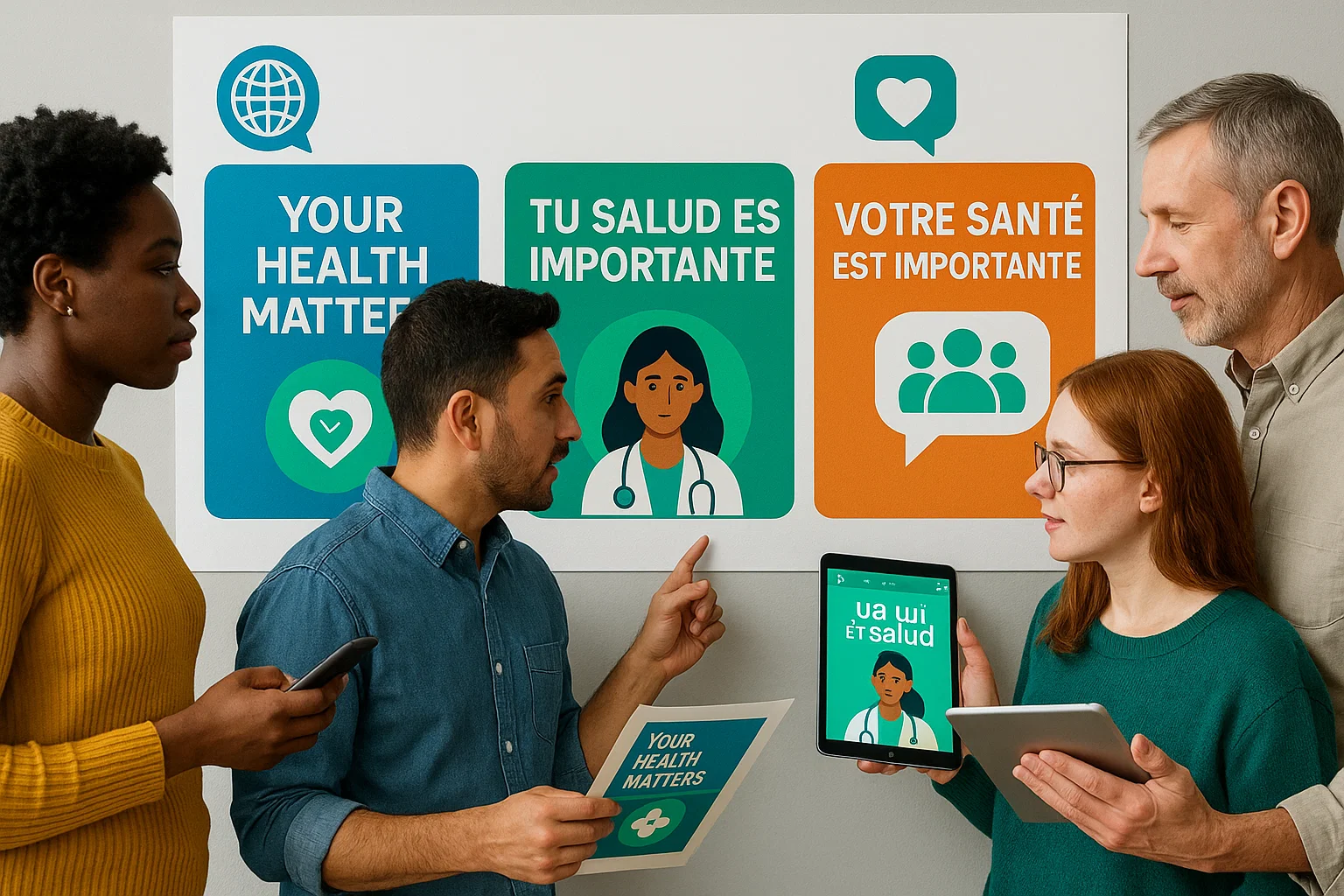
In an increasingly interconnected world, healthcare organizations face a critical challenge: how do you effectively communicate vital health information to communities that speak different languages and come from diverse cultural backgrounds? The answer lies in thoughtfully designed multilingual health campaigns that go beyond simple translation to embrace cultural adaptation and genuine inclusivity.
As our societies become more diverse, the need for multilingual health communication has never been more urgent. According to recent data, millions of people worldwide have limited proficiency in the dominant language of their country of residence, creating significant barriers to accessing healthcare information and services. This language gap isn’t just an inconvenience—it can be a matter of life and death.
In this comprehensive guide, we’ll explore the strategies, best practices, and practical steps you need to create multilingual health campaigns that truly resonate with diverse audiences. Whether you’re a healthcare professional, a marketing specialist in the health sector, or simply someone interested in health equity, this post will equip you with the knowledge to make your health communications more inclusive and effective.
Understanding the Importance of Multilingual Health Campaigns
The Language Barrier in Healthcare
Language barriers in healthcare settings contribute to serious disparities in health outcomes. When patients cannot effectively communicate with healthcare providers or understand health information, they’re more likely to experience medication errors, miss follow-up appointments, and have poorer health outcomes overall.
Research consistently shows that limited language proficiency is associated with lower rates of preventive care utilization, decreased patient satisfaction, and increased risk of adverse events. For healthcare organizations, this translates to not only ethical concerns but also legal and financial implications. In many countries, providing language access services isn’t just good practice—it’s a legal requirement under civil rights laws.
The Business Case for Multilingual Campaigns
Beyond the moral imperative, there’s a compelling business case for investing in multilingual health campaigns. Organizations that effectively communicate with diverse populations can:
- Expand their reach to previously underserved communities
- Build trust and loyalty among diverse patient populations
- Improve health outcomes, which can lead to better quality metrics and reimbursement rates
- Reduce costly miscommunications and their associated liability risks
- Enhance their reputation as inclusive, community-focused organizations
When you invest in multilingual campaigns, you’re not just checking a compliance box—you’re opening doors to meaningful connections with communities that have historically been marginalized in healthcare settings.
Key Principles for Effective Multilingual Health Campaigns
1. Go Beyond Translation: Embrace Cultural Adaptation
One of the most common mistakes in multilingual health campaigns is treating translation as a purely linguistic exercise. While accurate translation is essential, it’s only the first step. True effectiveness requires cultural adaptation, often called “transcreation.”
Cultural adaptation means considering how health concepts, visual imagery, family structures, and communication styles differ across cultures. For example, a campaign promoting mental health services might need dramatically different approaches for communities where mental health carries significant stigma versus those with more open attitudes toward psychological care.
Consider these cultural factors:
- Health beliefs and practices: Different cultures have varying beliefs about what causes illness and how it should be treated
- Family decision-making structures: In some cultures, health decisions are made collectively by families rather than by individuals
- Communication preferences: Direct communication styles that work in some cultures may seem rude or inappropriate in others
- Visual symbolism: Colors, images, and symbols carry different meanings across cultures
- Trust in medical authority: Levels of trust in healthcare systems and providers vary significantly based on historical and cultural contexts
2. Involve Community Members from the Start
The most effective multilingual health campaigns are co-created with members of the target communities rather than designed for them. This participatory approach ensures cultural relevance and helps build trust.
Community involvement should happen at every stage:
- Planning and strategy development: Include diverse voices when identifying health priorities and campaign objectives
- Content creation: Work with native speakers and cultural insiders to develop messaging
- Review and testing: Have community members review materials before launch
- Distribution and promotion: Partner with community organizations and trusted messengers
- Evaluation: Gather feedback from community members about campaign effectiveness
Community advisory boards, focus groups, and partnerships with community-based organizations can provide invaluable insights that prevent costly missteps and increase campaign effectiveness.
3. Prioritize Health Literacy
Health literacy—the ability to obtain, process, and understand basic health information—is a challenge even for native speakers. When working across languages, health literacy becomes even more critical.
Strategies to enhance health literacy in multilingual campaigns include:
- Use plain language: Avoid medical jargon and complex terminology
- Break down complex concepts: Use step-by-step explanations for complicated health information
- Incorporate visual aids: Images, diagrams, and videos can transcend language barriers
- Provide context: Don’t assume baseline knowledge about health systems or conditions
- Test comprehension: Use teach-back methods or surveys to ensure your message is understood
- Offer multiple formats: Provide information in written, audio, video, and interactive formats
Remember that health literacy isn’t just about education level—even highly educated individuals may struggle with health concepts outside their area of expertise, especially in a non-native language.
4. Choose the Right Languages and Dialects
Selecting which languages to prioritize requires careful analysis of your target population. Consider:
- Demographic data: Use census data, patient registration information, and community surveys to identify the languages spoken in your area
- Language diversity within language groups: Spanish speakers from Mexico may use different terms than those from Puerto Rico or Spain. Chinese speakers may use Mandarin, Cantonese, or other dialects
- Written vs. spoken language preferences: Some communities may prefer audio or video content over written materials
- Literacy levels: Consider literacy rates in both the target language and the dominant language
Don’t spread your resources too thin trying to cover every possible language. It’s better to do a thorough job with your top priority languages than to produce mediocre materials in many languages.
Practical Steps to Create Multilingual Health Campaigns
Step 1: Conduct a Needs Assessment
Before launching into campaign creation, invest time in understanding your target audience’s needs, preferences, and current barriers to accessing health information.
A comprehensive needs assessment should include:
- Analysis of demographic data to identify language groups in your service area
- Review of current language access services and their utilization rates
- Surveys or focus groups with community members to understand information needs and preferences
- Assessment of existing multilingual health resources and their effectiveness
- Identification of trusted community messengers and communication channels
This groundwork will inform every subsequent decision in your campaign development process.
Step 2: Assemble a Multilingual Team
Building an effective multilingual campaign requires a diverse team with various expertise:
- Professional translators who are native speakers of target languages and familiar with medical terminology
- Cultural consultants who can advise on cultural appropriateness and adaptation
- Community health workers or promotores who have existing relationships with target communities
- Health communication specialists who understand effective messaging strategies
- Graphic designers familiar with culturally appropriate visual communication
- Evaluation specialists who can measure campaign effectiveness
If your organization lacks in-house expertise, consider partnering with translation agencies, cultural organizations, or academic institutions that specialize in health communication.
Step 3: Develop Core Messages with Flexibility
Start by developing your core health messages in a “source” language (often English in many contexts), but do so with translation in mind:
- Use simple sentence structures that translate well
- Avoid idioms, metaphors, and culturally specific references
- Be specific rather than abstract
- Focus on key actions you want audiences to take
- Anticipate questions and concerns
Once you have core messages, work with translators and cultural consultants to adapt them for each target language. This isn’t about word-for-word translation but about conveying the same essential meaning and call to action in a culturally appropriate way.
Step 4: Create Culturally Adapted Materials
With your adapted messages in hand, develop campaign materials across multiple formats:
Print Materials: Brochures, flyers, posters, and fact sheets remain valuable, especially for communities with limited internet access. Ensure that:
- Design is clean and culturally appropriate
- Typography is easily readable (some languages require specific fonts)
- Layout accommodates different text lengths (translations often require more or less space than the source language)
- Contact information is prominently displayed
Digital Content: Websites, social media posts, emails, and text messages offer opportunities for interactive engagement. Remember to:
- Create separate pages or posts for each language rather than mixing languages
- Ensure all digital platforms are mobile-friendly
- Use culturally relevant images that reflect your target audiences
- Consider right-to-left languages if relevant (like Arabic or Hebrew)
Video and Audio: These formats are particularly effective for audiences with limited literacy or those who prefer oral communication:
- Use native speakers as narrators or presenters
- Include subtitles in multiple languages
- Keep videos concise and focused on key messages
- Consider podcast formats for longer-form content
In-Person Events: Health fairs, community presentations, and workshops allow for direct interaction:
- Provide interpretation services
- Offer materials in multiple languages
- Recruit bilingual staff or volunteers
- Partner with trusted community organizations
Step 5: Select Appropriate Distribution Channels
Even the most perfectly crafted campaign will fail if it doesn’t reach your target audience. Identify where your communities get their information:
Traditional Media: Ethnic newspapers, radio stations, and television channels remain influential in many immigrant communities. These outlets often have high trust levels and can provide endorsements that mainstream media cannot.
Social Media: Different communities favor different platforms. While Facebook remains popular across many demographics, younger audiences may prefer Instagram, TikTok, or platform-specific to their culture. Chinese communities might use WeChat, while some Latino communities favor WhatsApp.
Community Organizations: Churches, mosques, temples, cultural centers, schools, and community associations are trusted sources of information and natural partners for health campaigns.
Healthcare Settings: Don’t forget that clinics, hospitals, and pharmacies are obvious touchpoints. Ensure multilingual materials are visible and accessible in waiting rooms and exam rooms.
Door-to-Door Outreach: For some campaigns and communities, personal contact remains the most effective approach. Community health workers can distribute materials and answer questions directly.
Step 6: Train Your Team and Partners
Everyone involved in implementing your campaign needs training on:
- The campaign’s goals and key messages
- How to use and distribute materials appropriately
- Cultural sensitivity and competence
- Language access policies and procedures
- How to handle questions or concerns from community members
This training ensures consistency in messaging and helps prevent misunderstandings or miscommunications.
Step 7: Implement with Flexibility
Launch your campaign with a clear timeline and plan, but remain flexible. Be prepared to:
- Adjust messaging based on early feedback
- Shift resources to more effective channels
- Address unforeseen cultural sensitivities
- Respond to competing events or information
- Scale up successful elements and discontinue less effective ones
Consider a phased rollout that allows you to test and refine before full implementation.
Step 8: Evaluate and Iterate
Measurement is essential to understanding what works and what doesn’t. Develop an evaluation plan that includes:
Process Measures: Track implementation metrics like:
- Number of materials distributed
- Reach across different platforms and channels
- Attendance at events
- Website traffic by language
Outcome Measures: Assess whether you’re achieving your campaign goals:
- Changes in knowledge or attitudes (measured through surveys)
- Behavior change (like increased screening rates or vaccination uptake)
- Health outcomes in target populations
- Community feedback and satisfaction
Methods: Use a mix of quantitative and qualitative approaches:
- Pre- and post-campaign surveys
- Focus groups with community members
- Interviews with community partners
- Analysis of health service utilization data
- Social media analytics
Use evaluation findings to refine your campaign continuously and inform future efforts.
Common Challenges and How to Overcome Them
Budget Constraints
Multilingual campaigns require investment, but there are ways to maximize impact with limited resources:
- Prioritize languages based on community size and need
- Start with digital materials which are less expensive to produce and easier to update
- Partner with organizations that can provide in-kind contributions
- Leverage free translation tools for initial drafts (but always have professional translators review)
- Reuse and adapt materials from other organizations (with permission)
- Apply for grants specifically designated for health equity or language access initiatives
Maintaining Quality Across Languages
Ensuring consistent quality when producing materials in multiple languages can be challenging:
- Work with certified translators who have medical interpretation training
- Implement a review process that includes back-translation and community review
- Create glossaries of key terms to ensure consistency across materials
- Use translation memory tools that help maintain consistency in recurring terms and phrases
- Establish quality standards and communicate them clearly to all translators and reviewers
Keeping Materials Current
Health information changes, and multilingual materials must stay up-to-date:
- Plan for updates from the beginning by budgeting time and resources for revisions
- Use formats that are easy to update (digital materials over print when possible)
- Establish a review schedule to check materials regularly for accuracy
- Create a system for quickly updating and redistributing materials when information changes
- Date all materials so users know when they were last updated
Reaching Hard-to-Reach Populations
Some communities face multiple barriers beyond language:
- Build trust gradually through consistent presence and follow-through
- Work with trusted messengers from within the community
- Address practical barriers like transportation, childcare, and scheduling
- Meet people where they are both literally (go to community spaces) and figuratively (address their actual concerns)
- Be patient and persistent – meaningful relationships take time to develop
Navigating Cultural Sensitivities
Cultural missteps can derail even well-intentioned campaigns:
- Invest in cultural competency training for your entire team
- Consult with cultural experts before finalizing materials
- Test materials with community members before wide distribution
- Be willing to acknowledge and learn from mistakes when they occur
- Recognize that cultures aren’t monolithic – there’s diversity within every community
Case Studies: Successful Multilingual Health Campaigns
Example 1: COVID-19 Vaccination Campaigns
The COVID-19 pandemic highlighted the critical importance of multilingual health communication. Successful vaccination campaigns:
- Produced materials in dozens of languages based on local demographics
- Partnered with trusted community leaders, including religious leaders and local celebrities
- Used multiple channels including ethnic media, social media, and community events
- Addressed specific concerns and misinformation circulating in different communities
- Provided language-concordant vaccination sites with bilingual staff
Organizations that invested in comprehensive multilingual outreach saw significantly higher vaccination rates in immigrant and refugee communities compared to those that relied primarily on English-language communication.
Example 2: Maternal Health Education
A maternal health program targeting immigrant women developed a multilingual campaign that:
- Created culturally adapted videos featuring women from target communities sharing their experiences
- Partnered with doulas and community health workers who spoke target languages
- Offered group prenatal classes in multiple languages
- Provided written materials at appropriate literacy levels
- Connected women to resources in their preferred language
The campaign resulted in increased prenatal care utilization, higher rates of breastfeeding initiation, and improved postpartum follow-up among participants.
Example 3: Mental Health Awareness
A mental health organization addressing stigma in Asian American communities:
- Worked with community advisors to understand cultural concepts of mental health
- Developed messaging that resonated with family-centered values
- Created materials in multiple Asian languages and dialects
- Used social media influencers from target communities
- Offered workshops in community settings led by bilingual, bicultural mental health professionals
The campaign successfully increased knowledge about mental health resources and reduced stigma, as measured by pre- and post-campaign surveys.
Technology and Tools to Support Multilingual Campaigns
Translation Management Systems
Modern translation management systems can help organizations:
- Maintain glossaries and style guides
- Ensure consistency across materials
- Streamline the translation workflow
- Track versions and updates
- Collaborate with translators remotely
Popular platforms include Smartling, Transifex, and Lokalise.
Multilingual Website Platforms
Website platforms with robust multilingual capabilities include:
- WordPress with WPML or Polylang plugins: Affordable options for small to medium organizations
- Drupal: Open-source platform with strong multilingual support
- Contentful: Headless CMS for complex multilingual needs
Communication Platforms
Tools for reaching diverse audiences include:
- WhatsApp Business: Popular in many Latino and international communities
- WeChat: Essential for reaching Chinese-speaking audiences
- Language Line or Cyracom: For real-time interpretation services
- Signly: For British Sign Language integration
Analytics Tools
Understanding how different language groups interact with your content:
- Google Analytics: Track website traffic by language preference
- Social media analytics: Most platforms provide demographic and language data
- Survey tools: Platforms like SurveyMonkey and Qualtrics offer multilingual surveys
Looking Forward: The Future of Multilingual Health Communication
As technology advances and our societies become increasingly diverse, several trends are shaping the future of multilingual health campaigns:
Artificial Intelligence and Machine Translation
AI-powered translation tools are improving rapidly, though they’re not yet ready to replace human translators for critical health information. However, they can:
- Provide rough drafts for human translators to refine
- Offer real-time translation for less critical communications
- Help identify where professional translation is most needed
Personalization at Scale
Digital tools increasingly allow for personalized health communication that adapts to individual language preferences, health literacy levels, and cultural backgrounds automatically.
Video and Interactive Content
As video consumption continues to grow and internet access expands, video will become even more central to multilingual health campaigns. Interactive tools, chatbots, and gamified learning experiences offer new ways to engage diverse audiences.
Community-Led Health Communication
There’s a growing recognition that the most effective health communication comes from within communities themselves. Supporting community members to create and share health information in their own voices and languages will become increasingly important.
Conclusion: Making Health Information Accessible to All
Creating effective multilingual health campaigns is both an art and a science. It requires linguistic expertise, cultural sensitivity, community engagement, strategic planning, and ongoing evaluation. While the process can be complex and resource-intensive, the impact is profound: you’re quite literally helping to save lives and improve health outcomes for communities that have historically been underserved.
The key takeaways for successful multilingual health campaigns are:
- Go beyond translation to embrace true cultural adaptation
- Involve community members at every stage of campaign development
- Prioritize health literacy and clear communication
- Use multiple channels to reach diverse audiences where they are
- Evaluate continuously and be willing to adapt based on feedback
- Build trust through consistency, respect, and authentic engagement
- Invest in quality – poorly executed multilingual materials can do more harm than good
Remember that multilingual health communication isn’t a one-time project but an ongoing commitment to health equity. Every community deserves access to health information in a language they understand and in a culturally meaningful way. By following the strategies outlined in this guide, you can create campaigns that truly reach and resonate with diverse audiences, ultimately contributing to healthier, more equitable communities.
As you embark on your multilingual health campaign journey, stay curious, remain humble, and always center the voices and experiences of the communities you aim to serve. The path may be challenging, but the destination—a world where language is no longer a barrier to good health—is well worth the effort.
References
- Agency for Healthcare Research and Quality. (2020). Health Literacy Universal Precautions Toolkit. Available at: https://www.ahrq.gov/health-literacy/improve/precautions/index.html
- Centers for Disease Control and Prevention. (2021). Gateway to Health Communication & Social Marketing Practice. Available at: https://www.cdc.gov/healthcommunication/
- Karliner, L. S., Jacobs, E. A., Chen, A. H., & Mutha, S. (2007). Do Professional Interpreters Improve Clinical Care for Patients with Limited English Proficiency? A Systematic Review of the Literature. Health Services Research, 42(2), 727-754.
- National Standards for Culturally and Linguistically Appropriate Services (CLAS) in Health and Health Care. U.S. Department of Health and Human Services, Office of Minority Health. Available at: https://thinkculturalhealth.hhs.gov/clas
- Ngo-Metzger, Q., Sorkin, D. H., Phillips, R. S., Greenfield, S., Massagli, M. P., Clarridge, B., & Kaplan, S. H. (2007). Providing High-Quality Care for Limited English Proficient Patients: The Importance of Language Concordance and Interpreter Use. Journal of General Internal Medicine, 22(Suppl 2), 324-330.
- Schwei, R. J., Del Pozo, S., Agger-Gupta, N., Alvarado-Little, W., Bagchi, A., Chen, A. H., Diamond, L., Gany, F., Wong, D., & Jacobs, E. A. (2016). Changes in research on language barriers in health care since 2003: A cross-sectional review study. International Journal of Nursing Studies, 54, 36-44.
- World Health Organization. (2020). Risk Communication and Community Engagement (RCCE) Action Plan Guidance: COVID-19 Preparedness & Response. Available at: https://www.who.int/publications/i/item/risk-communication-and-community-engagement-(rcce)-action-plan-guidance
- Wilson, E., Chen, A. H., Grumbach, K., Wang, F., & Fernandez, A. (2005). Effects of Limited English Proficiency and Physician Language on Health Care Comprehension. Journal of General Internal Medicine, 20(9), 800-806.
- Sentell, T., & Braun, K. L. (2012). Low Health Literacy, Limited English Proficiency, and Health Status in Asians, Latinos, and Other Racial/Ethnic Groups in California. Journal of Health Communication, 17(sup3), 82-99.
- Diamond, L. C., & Jacobs, E. A. (2010). Let’s not contribute to disparities: the best methods for teaching clinicians how to overcome language barriers to health care. Journal of General Internal Medicine, 25(Suppl 2), 189-193.
Useful External Resources
- Think Cultural Health: National CLAS Standards – https://thinkculturalhealth.hhs.gov/clas
- CDC Health Literacy Resources: https://www.cdc.gov/healthliteracy/
- National Council on Interpreting in Health Care: https://www.ncihc.org/
- Migration Policy Institute – Language Access Resources: https://www.migrationpolicy.org/
- Health Resources and Services Administration – Culture, Language and Health Literacy: https://www.hrsa.gov/about/organization/bureaus/ohe/health-literacy
- Plain Language Action and Information Network: https://www.plainlanguage.gov/
- Ethnomed: Multilingual health information – https://ethnomed.org/
- International Medical Interpreters Association: https://www.imiaweb.org/
- American Translators Association – Healthcare Division: https://www.atanet.org/
- Language Access Network: https://www.languageaccessnetwork.org/