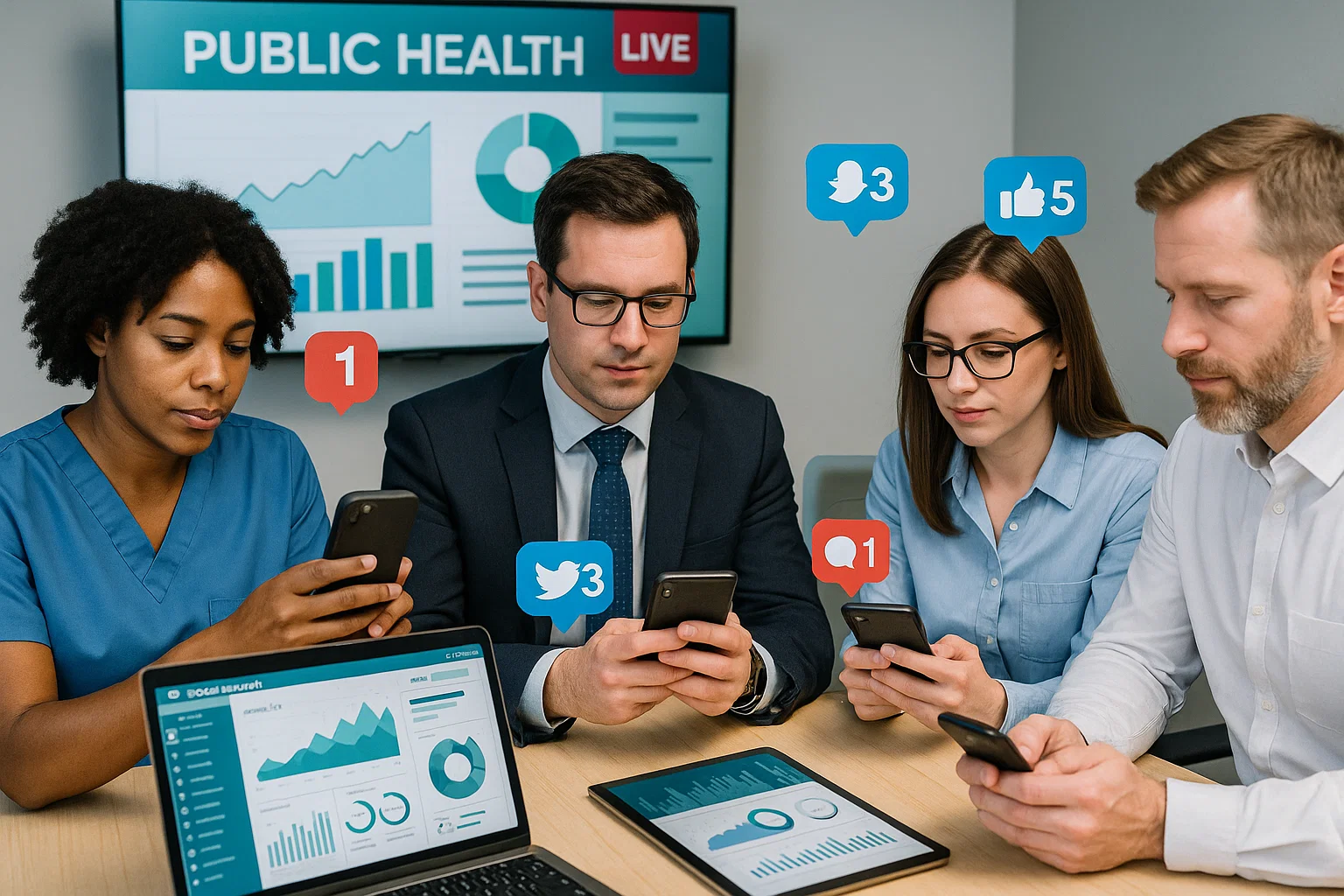
When a health crisis emerges—whether it’s a disease outbreak, a natural disaster, or a public health threat—every second counts. The ability to rapidly disseminate accurate, actionable information can mean the difference between containment and widespread crisis, between informed communities and dangerous misinformation. In today’s digital landscape, social media has become the frontline tool for real-time public health communication, fundamentally transforming how health authorities connect with the public during critical moments.
Gone are the days when public health agencies could rely solely on press releases, television broadcasts, or newspaper announcements to reach their communities. By the time traditional media processes information and delivers it to audiences, critical hours—sometimes days—have passed. Social media operates at the speed of modern life, allowing health organizations to push updates, respond to concerns, and counter misinformation in real-time, meeting people where they already spend hours of their daily lives.
But with great power comes great responsibility. The same platforms that enable rapid information sharing can also amplify misinformation, create panic, or overwhelm audiences with conflicting messages. Success requires more than simply posting updates—it demands strategic planning, authentic engagement, and a nuanced understanding of how different platforms and audiences function.
In this comprehensive guide, we’ll explore how public health organizations can harness social media’s power to deliver timely, trusted, and actionable health updates. Whether you’re a public health professional developing communication strategies, a healthcare marketer building audience engagement, or someone interested in understanding how digital platforms shape health communication, you’ll discover practical insights for navigating this critical intersection of technology and public health.
Why Social Media Matters for Public Health Communication
The Speed Imperative
Public health emergencies don’t follow a 9-to-5 schedule or wait for the morning news cycle. When an outbreak begins, when contaminated products need immediate recall, or when extreme weather threatens community health, information needs to flow immediately. Social media provides the infrastructure for instant communication that traditional channels simply cannot match.
Consider the timeline of a typical health alert through different channels. A traditional press release might take hours to draft, approve through organizational hierarchies, distribute to media outlets, and finally reach audiences through news broadcasts or articles. Social media updates can be drafted, approved, and published within minutes, reaching thousands or millions of people before traditional media even begins its process.
This speed advantage isn’t just about being first—it’s about being there when your audience is most receptive and most in need of guidance. During crises, people immediately turn to their phones and social media feeds for information. Organizations that can provide accurate, authoritative updates in these crucial early moments establish themselves as trusted sources and can shape the narrative before misinformation takes hold.
Meeting People Where They Are
The numbers are staggering: billions of people worldwide use social media platforms daily, spending an average of over two hours per day on these platforms. For many demographics, particularly younger generations, social media has become the primary source of news and information, surpassing traditional media consumption.
Public health organizations that fail to maintain active, engaging social media presences are essentially invisible to large segments of their target populations. You can have the most accurate information and the most thoughtful public health guidance, but if it’s only available on your website or through press releases, you’re missing the majority of your audience.
Different demographics cluster on different platforms with distinct usage patterns. Facebook remains dominant among older adults, Instagram attracts younger millennials and Gen Z, TikTok has exploded among teens and young adults, while Twitter (now X) serves as a hub for real-time news and professional discourse. LinkedIn reaches professional audiences, and platforms like WhatsApp and Telegram facilitate group communication in many international communities. Effective public health communication requires meeting diverse audiences on their preferred platforms.
Two-Way Communication and Community Engagement
Perhaps social media’s most transformative aspect is its shift from one-way broadcasting to two-way conversation. Unlike traditional media where communication flows from authorities to passive audiences, social media enables dialogue, feedback, and community interaction.
This conversational dynamic offers tremendous advantages for public health communication. Organizations can:
- Gauge public sentiment and concerns in real-time through comments, questions, and engagement metrics
- Address specific questions and misconceptions directly, providing personalized guidance
- Crowdsource information about on-the-ground conditions during emergencies
- Build relationships and trust over time through consistent, authentic engagement
- Identify and amplify community champions who can extend reach and credibility
- Adapt messaging based on how audiences respond to initial communications
This feedback loop allows public health communicators to be agile and responsive, adjusting strategies based on what’s working and what communities actually need to know.
Combating Misinformation
While social media can spread misinformation rapidly, it also provides tools to combat it. Public health organizations that maintain strong social media presences can:
- Respond quickly to false claims before they gain traction
- Provide evidence-based corrections with authoritative sources
- Use platform features like fact-checking labels and content warnings
- Engage directly with influential voices spreading misinformation
- Create shareable content that makes accurate information more appealing and accessible than false claims
The battle against health misinformation increasingly happens on social media. Organizations absent from these platforms cede that battleground to misinformation spreaders, conspiracy theorists, and well-meaning but incorrect voices.
Platform-Specific Strategies for Public Health Updates
Each social media platform has unique characteristics, audiences, and best practices. Effective public health communication requires tailoring your approach to each platform’s strengths and user expectations.
Twitter/X: The Real-Time News Hub
Twitter remains the go-to platform for breaking news and real-time updates, making it particularly valuable during public health emergencies.
Strengths:
- Fastest-moving platform for breaking news
- Character limits force concise, clear messaging
- Hashtags enable topic tracking and trending visibility
- Retweets amplify reach exponentially
- Direct engagement with journalists, officials, and influencers
- Thread feature allows for detailed explanations while maintaining feed presence
Best Practices:
- Post frequent, bite-sized updates during evolving situations
- Use clear, consistent hashtags for tracking (e.g., #PublicHealthAlert, #YourCityHealth)
- Pin your most important message to your profile
- Create threads for complex information that needs context
- Monitor mentions and replies to address questions and concerns
- Leverage Twitter Spaces for live audio Q&A sessions
- Post during peak engagement times (generally weekday mornings and evenings)
Example Approach: During a disease outbreak, post initial alert immediately with key facts (what, where, when, how to protect yourself), then follow with updates every 2-4 hours as situation evolves. Use threads to explain technical information like transmission mechanisms or testing criteria. Monitor trending hashtags to identify questions and concerns, then address them proactively.
Facebook: The Community Platform
Facebook’s massive user base and community-oriented features make it ideal for detailed updates and fostering ongoing dialogue.
Strengths:
- Largest user base, especially among middle-aged and older adults
- Supports longer-form content and detailed explanations
- Strong community features (groups, events, live video)
- Sophisticated targeting and advertising capabilities
- High engagement rates for visual content
- Cross-posting to Instagram simplifies multi-platform management
Best Practices:
- Post comprehensive updates with context and background information
- Use Facebook Live for press conferences, Q&A sessions, and community briefings
- Create events for vaccination clinics, testing sites, or community health meetings
- Develop Facebook Groups for ongoing community health discussions
- Share infographics and videos that explain complex health concepts visually
- Respond thoughtfully to comments to build trust and address concerns
- Use Facebook’s crisis response features during emergencies
- Pin critical updates to the top of your page
Example Approach: Post a detailed status update about a health advisory, including background, current status, what actions community members should take, and where to find additional resources. Follow up with a Facebook Live session where health officials answer community questions. Create a dedicated event for any public health response activities (testing sites, vaccination clinics) to improve attendance and awareness.
Instagram: Visual Storytelling
Instagram’s visual-first format makes complex health information more accessible and engaging, particularly for younger audiences.
Strengths:
- Highly visual platform perfect for infographics and short videos
- Stories feature enables quick, informal updates that disappear after 24 hours
- Reels compete with TikTok for short-form video content
- Strong engagement rates, especially among younger demographics
- Instagram Live for real-time connection
- Carousel posts allow step-by-step explanations
Best Practices:
- Create eye-catching infographics that distill key health messages
- Use Stories for timely, informal updates and behind-the-scenes content
- Develop Reels that make health information entertaining and shareable
- Leverage Instagram Live for expert interviews and Q&A sessions
- Use carousel posts to break down complex processes (e.g., “How to Properly Wear a Mask” in 5 slides)
- Include clear calls-to-action in captions (link in bio, swipe up in Stories for verified accounts)
- Use relevant hashtags to improve discoverability
- Tag partner organizations and experts to expand reach
Example Approach: Create a series of carousel posts explaining a health threat, with each slide covering one key aspect (what it is, symptoms, prevention, treatment, resources). Share informal Stories showing health workers preparing response efforts. Develop Reels that demonstrate proper handwashing or other preventive behaviors in an engaging way. Host Instagram Live sessions with health experts answering community questions.
TikTok: Reaching the Next Generation
TikTok’s explosive growth, particularly among Gen Z, makes it essential for reaching younger audiences who may not follow traditional health information sources.
Strengths:
- Massive reach among teens and young adults
- Algorithm favors content quality over follower count
- Short, entertaining format makes information accessible
- Trend participation can dramatically increase visibility
- Duet and Stitch features enable creative engagement
- Authentic, informal tone resonates with younger audiences
Best Practices:
- Create short, engaging videos (15-60 seconds) that entertain while informing
- Participate in trending sounds and challenges when appropriate
- Use text overlays to ensure accessibility without sound
- Partner with health-focused influencers and creators
- Show the human side of public health work
- Address myths and misconceptions in a relatable way
- Post frequently (at least daily) to maintain visibility
- Use trending hashtags alongside health-specific tags
Example Approach: Create a 30-second video where a public health nurse quickly explains a new health guideline while using a trending sound. Make a series addressing common misconceptions about a health issue with fast-paced, fact-based rebuttals. Partner with local TikTok creators who can translate health messages for their existing audiences in authentic voices.
LinkedIn: Professional and B2B Communication
While often overlooked for public health communication, LinkedIn serves as an important channel for reaching healthcare professionals, policymakers, and business leaders.
Strengths:
- Professional audience including healthcare workers and decision-makers
- Longer-form content performs well
- Strong sharing among professional networks
- Effective for policy updates and technical information
- Less misinformation compared to other platforms
- Professional credibility enhances message trust
Best Practices:
- Share detailed analyses and policy implications of health updates
- Post thought leadership content from your organization’s subject matter experts
- Engage with professional groups and healthcare organizations
- Share behind-the-scenes insights into public health decision-making
- Provide resources specifically for healthcare professionals and employers
- Use LinkedIn articles for comprehensive guides and reports
- Network with key stakeholders and influencers in the health sector
Example Approach: Publish a LinkedIn article detailing the scientific rationale behind a new public health recommendation. Share updates specifically relevant to employers (workplace safety guidance, vaccination clinic resources). Have your health officials share their perspectives and experiences responding to a health emergency, humanizing your organization while building professional credibility.
YouTube: Long-Form Educational Content
YouTube serves as a repository for detailed, evergreen health content that provides depth beyond what shorter social media posts allow.
Strengths:
- Second-largest search engine after Google
- Supports long-form, detailed explanations
- Excellent for tutorials, demonstrations, and educational content
- Strong SEO benefits (appears in Google search results)
- Accessibility features (closed captions, transcripts)
- Content remains discoverable long after posting
Best Practices:
- Create comprehensive videos explaining health issues, procedures, or recommendations
- Develop demonstration videos for health behaviors (proper handwashing, CPR, etc.)
- Record and archive press conferences and community briefings
- Create playlist series on different health topics
- Optimize video titles, descriptions, and tags for searchability
- Include accurate timestamps in descriptions for easy navigation
- Add closed captions for accessibility
- Pin important comments or create FAQ comments
Example Approach: Produce a 10-15 minute video thoroughly explaining a public health emergency, including background, current situation, response efforts, and guidance for different audiences. Create shorter demonstration videos showing proper protective equipment use. Post weekly “Health Update” videos during ongoing situations, creating a consistent series people can follow.
Developing an Effective Social Media Strategy for Health Updates
Building Your Foundation Before Crisis Strikes
The worst time to start building a social media presence is during a public health emergency. Organizations that scramble to create social media accounts and build audiences during crises face immediate credibility challenges and struggle to cut through the noise.
Pre-Crisis Essentials:
- Establish verified accounts on major platforms well in advance
- Build and engage your audience consistently with helpful, relevant content
- Develop brand voice and visual identity that conveys authority and approachability
- Create content templates for common types of health updates
- Build relationships with influencers, community organizations, and media
- Train your team on social media protocols and platform features
- Establish approval workflows that balance accuracy with speed
- Test your crisis communication plan with drills and simulations
Think of your social media presence as a community relationship that needs nurturing over time. Post regular health tips, celebrate public health victories, recognize community partners, share behind-the-scenes glimpses of your work, and engage with your audience’s non-crisis questions. When emergencies arise, you’ll have an established, trusted platform and an engaged audience ready to receive and share your messages.
Creating Effective Social Media Content
Great public health social media content balances several often-competing priorities: accuracy, urgency, accessibility, engagement, and emotional resonance.
Content Principles:
Clarity First: During health emergencies, people are stressed and may be frightened. Your messages must be immediately understandable. Use plain language, avoid jargon, define necessary technical terms, and structure information hierarchically (most important first).
Visual Communication: Incorporate infographics, photos, videos, and other visual elements that make information scannable and shareable. Many users scroll quickly through feeds, and visual content stops the scroll better than text alone.
Consistency Across Platforms: While you should adapt content to each platform’s format, your core messages should remain consistent. Mixed messages across platforms create confusion and erode trust.
Actionable Guidance: People want to know what to do, not just what’s happening. Every update should include clear, specific actions audiences can take to protect themselves and their communities.
Emotional Intelligence: Acknowledge the emotional reality of health crises. Show empathy for anxiety and disruption while maintaining a calm, authoritative tone that provides reassurance without minimizing real concerns.
Credibility Markers: Include sources for your information, credentials of experts you’re citing, and clear identification of official accounts to help audiences distinguish accurate information from misinformation.
Accessibility: Make content accessible to all users by including alt text for images, captions for videos, clear fonts, high color contrast, and plain language. Remember that some audience members may have limited English proficiency, low health literacy, or disabilities.
Timing and Frequency
When to post matters nearly as much as what you post. Different situations call for different posting rhythms.
During Active Emergencies:
- Post immediately when new information becomes available
- Provide regular updates even if the situation hasn’t changed (e.g., “No new cases reported today” reduces anxiety)
- Increase frequency during rapid developments
- Post at times when your audience is most active (check your analytics)
- Don’t wake people up unless absolutely necessary for immediate action
During Ongoing Situations:
- Establish a predictable update schedule (e.g., daily briefings at 3 PM)
- Post more frequently at the start, then taper as situation stabilizes
- Continue engagement even between major updates
- Share helpful resources, answer common questions, and recognize community efforts
Routine Public Health Communication:
- Post regularly (at least several times per week) to maintain presence
- Focus on educational content, preventive health tips, and community stories
- Build a content calendar around health observances and seasonal health issues
- Engage consistently with your audience to build trust and familiarity
Managing Comments and Engagement
Social media is a conversation, not a broadcast. How you handle comments, questions, and criticism significantly impacts your credibility and effectiveness.
Engagement Best Practices:
Respond Promptly: Acknowledge comments and questions quickly, even if you need time for a complete answer. A simple “Thanks for your question—we’re looking into this and will respond soon” shows you’re listening.
Be Human: Write in a warm, conversational tone. It’s okay to show personality while maintaining professionalism. People connect with people, not institutions.
Address Misinformation Tactfully: When correcting false information, focus on providing accurate facts rather than attacking or shaming the person sharing misinformation. Use phrases like “Here’s what we know…” rather than “You’re wrong because…”
Elevate Important Questions: When multiple people ask similar questions, create a new post addressing that topic rather than responding individually in comments.
Know When to Take Conversations Private: For personal health situations, private information, or complex issues, move the conversation to direct messages or direct them to appropriate resources.
Monitor Tone and Trolling: Don’t feed trolls or engage with clearly bad-faith actors. Focus your energy on genuine questions and concerns. Hide or delete comments that violate community guidelines (hate speech, spam, dangerous misinformation).
Create Community Guidelines: Publish clear community standards for your social media spaces and enforce them consistently.
Building and Leveraging Partnerships
You don’t have to do this alone. Strategic partnerships extend your reach, enhance your credibility, and help you connect with audiences you might not reach directly.
Key Partnership Types:
Healthcare Organizations: Hospitals, clinics, professional associations, and medical practices can amplify your messages to their audiences and lend additional credibility.
Community Organizations: Faith-based groups, cultural organizations, neighborhood associations, and service clubs have established trust within their communities and can help translate your messages for specific populations.
Influencers and Trusted Voices: Healthcare professionals, local celebrities, community leaders, and social media influencers who align with health promotion can reach audiences skeptical of official sources.
Media Partners: Traditional media outlets, local news stations, and journalists can help extend your social media messages to broader audiences.
Government and NGO Partners: Coordinate with other government agencies, non-profits, and international health organizations to present unified messages and avoid contradictions.
Partnership Strategies:
- Develop formal partnerships before crises occur
- Create shareable content that partners can easily post to their audiences
- Tag partners in relevant posts to encourage sharing
- Recognize partners publicly to strengthen relationships
- Coordinate messaging to ensure consistency
- Provide partners with toolkits (graphics, suggested language, key messages)
Navigating Challenges and Pitfalls
The Misinformation Minefield
Health misinformation spreads rapidly on social media, often outpacing accurate information. False claims about treatments, conspiracy theories about disease origins, and misleading statistics can cause real harm by discouraging preventive behaviors or encouraging dangerous practices.
Combating Misinformation:
Be Proactive: Address common misconceptions before they spread widely. Create content specifically debunking myths using clear, shareable formats.
Respond Quickly: When significant misinformation emerges, address it promptly with evidence-based corrections. Speed matters—the longer false information circulates uncorrected, the more people believe it.
Use the “Truth Sandwich”: When correcting misinformation, structure your message as: (1) State the truth, (2) Acknowledge the myth briefly without repeating it in detail, (3) Return to the truth with evidence. This prevents reinforcing the myth you’re trying to dispel.
Make Truth More Engaging: False information often spreads because it’s emotionally compelling or simple. Make accurate information equally engaging through storytelling, visuals, and emotional resonance.
Leverage Platform Tools: Use reporting features to flag dangerous misinformation. Work with platform misinformation teams when available. Apply for partnerships that provide fact-checking labels and information panels.
Build Prebunking Campaigns: “Prebunking” (inoculation against misinformation) teaches people to recognize manipulation tactics before encountering specific false claims, building overall resistance to misinformation.
Maintaining Credibility Under Pressure
Public health crises are complex, evolving situations where information changes as scientists learn more. This creates communication challenges when audiences expect certainty.
Credibility Strategies:
Be Transparent About Uncertainty: Clearly communicate what you know, what you don’t know, and what you’re working to find out. Acknowledge when recommendations might change as new information emerges.
Explain Your Process: Help audiences understand how public health decisions are made. Share the evidence and reasoning behind recommendations.
Admit Mistakes Quickly: When errors occur (and they will), acknowledge them immediately, correct them clearly, and explain what you’re doing to prevent similar mistakes.
Show Your Work: Link to sources, cite studies, and explain the scientific basis for your guidance. This helps audiences understand that recommendations come from evidence, not arbitrary decisions.
Maintain Consistency: When multiple experts or agencies provide guidance, coordinate to prevent conflicting messages. If disagreements exist, explain the different perspectives and your rationale.
Resource Constraints
Most public health organizations operate with limited communications staff and budget. Managing multiple social media platforms during crises can quickly overwhelm small teams.
Resource Management Strategies:
Prioritize Platforms: Focus your efforts on platforms where your target audiences are most active rather than trying to maintain equal presence everywhere.
Use Scheduling Tools: Platforms like Hootsuite, Buffer, or Sprout Social let you schedule posts in advance, manage multiple accounts from one dashboard, and monitor engagement efficiently.
Develop Templates: Create templates for common types of updates so you’re not starting from scratch each time.
Build a Content Bank: Maintain a library of evergreen content (infographics, explainer videos, FAQ documents) that can be quickly deployed or adapted.
Establish Clear Workflows: Define roles, approval processes, and escalation procedures so your team operates efficiently even under pressure.
Train Broadly: Don’t rely on one or two social media experts. Train multiple staff members so you have backup capacity during emergencies.
Leverage Automation Wisely: Use automation for routine tasks (posting scheduled content, monitoring keywords) but maintain human oversight for crisis response and engagement.
Privacy and Legal Considerations
Public health communication on social media must navigate privacy laws, professional ethics, and organizational policies.
Key Considerations:
HIPAA Compliance: Never share protected health information on social media. Be cautious even with de-identified information that might be identifiable in context.
Copyright and Permissions: Ensure you have rights to any images, videos, or content you share. Give proper credit when sharing others’ content.
Official Capacity: Clearly distinguish between organizational accounts and personal accounts. Train staff on what can and cannot be shared from personal accounts about work.
Record Retention: Many government agencies must preserve social media communications as public records. Establish appropriate systems and policies.
Emergency Communications Law: Understand legal protections and requirements for emergency public health communications in your jurisdiction.
Defamation Risks: Be careful about how you discuss individuals, organizations, or products. Focus on facts and avoid inflammatory language.
Measuring Success and Continuous Improvement
Key Performance Indicators
How do you know if your social media strategy is working? Effective measurement goes beyond vanity metrics like follower counts to focus on indicators that reflect real impact.
Reach Metrics:
- Impressions: How many times your content was displayed
- Reach: How many unique users saw your content
- Follower growth: Trends in audience size over time
- Share rate: How often users share your content to their networks
Engagement Metrics:
- Engagement rate: Likes, comments, and shares as a percentage of reach
- Click-through rate: How often users click links in your posts
- Video views and completion rate: How many people watch your videos and for how long
- Comments and questions: Volume and sentiment of audience interaction
Impact Metrics:
- Website traffic from social media: Users following links to detailed resources
- Behavior change: Surveys showing changes in knowledge, attitudes, or reported behaviors
- Service utilization: Changes in testing, vaccination, or other health service uptake
- Media coverage: Whether your social media content drives traditional media attention
Sentiment Analysis:
- Tone of comments: Whether engagement is positive, neutral, or negative
- Trust indicators: Whether audiences perceive you as credible and trustworthy
- Misinformation reduction: Whether false claims are decreasing in your comment sections
Tools for Measurement
Platform Native Analytics: All major platforms provide free analytics showing basic metrics like reach, engagement, and demographics. Start here to understand your baseline performance.
Social Media Management Platforms: Tools like Hootsuite, Sprout Social, or Later offer advanced analytics across multiple platforms, making it easier to track performance and generate reports.
Survey Tools: Platforms like SurveyMonkey or Google Forms let you directly ask your audience about their awareness, knowledge, and behaviors.
Media Monitoring Tools: Services like Meltwater or Brandwatch track mentions of your organization and key topics across social media and news outlets.
Google Analytics: Track how social media drives traffic to your website and what users do once they arrive.
Learning and Iterating
Measurement only matters if you use insights to improve. Build a culture of continuous learning:
Regular Reviews: Schedule weekly or monthly reviews of social media performance to identify what’s working and what isn’t.
A/B Testing: Experiment with different content types, posting times, formats, and messages to see what resonates most with your audience.
Audience Feedback: Directly ask your audience what information they need and how they prefer to receive it.
Competitive Analysis: Monitor how other health organizations use social media to identify successful strategies and gaps in your approach.
Post-Crisis Debriefs: After each health emergency, conduct a thorough review of your social media response to identify lessons learned and areas for improvement.
Staff Training: Regularly update your team on new platform features, emerging trends, and evolving best practices.
Case Studies: Social Media in Action
Case Study 1: COVID-19 Pandemic Response
The COVID-19 pandemic represented the most significant test of public health social media communication in history. Organizations worldwide used social media to provide real-time updates on case counts, evolving guidance, vaccination availability, and addressing widespread misinformation.
Successful Strategies:
- Daily video updates from health officials providing transparency and human connection
- Interactive maps and dashboards shared through social media showing real-time data
- Partnerships with influencers and celebrities to promote vaccination and preventive behaviors
- Rapid-response teams dedicated to addressing misinformation and answering questions
- Multilingual content reaching diverse communities
- Behind-the-scenes content showing healthcare workers and scientists building trust
Lessons Learned:
- The importance of consistent, honest communication even when information is evolving
- Need for platform-specific content rather than one-size-fits-all approaches
- Value of empathy and acknowledging the emotional toll of the pandemic
- Critical role of prebunking and rapid misinformation response
- Importance of coordination across agencies to avoid conflicting messages
Case Study 2: Extreme Weather and Heat Warnings
Public health agencies increasingly use social media for climate-related health threats like extreme heat, wildfires, and hurricanes.
Effective Approaches:
- Real-time updates about air quality, temperature, and health risks
- Geographically targeted content reaching people in affected areas
- Partnerships with meteorologists and weather services to extend reach
- Visual content showing proper protective measures
- Lists of cooling centers, shelters, and emergency resources
- Success stories of communities implementing heat action plans
Impact:
- Increased awareness of heat-related health risks
- Higher utilization of cooling centers and protective resources
- Faster community response to extreme weather events
- Improved preparedness through advance warning and education
Case Study 3: Food Safety Alerts
When contaminated food products threaten public health, social media enables rapid warnings that can reach consumers before they consume dangerous products.
Best Practices:
- Immediate alerts with clear product identification (photos, UPC codes, lot numbers)
- Instructions for returning or disposing of affected products
- Updates on investigation progress and when all-clear is given
- Partnerships with retailers and manufacturers to amplify messages
- Answering consumer questions about symptoms and when to seek care
Results:
- Faster product recalls and reduced exposures
- Better consumer compliance with recall notices
- Fewer illnesses through early intervention
- Improved trust in food safety systems
Emerging Trends and Future Directions
Artificial Intelligence and Automation
AI is transforming social media health communication in several ways:
Chatbots and Virtual Assistants: Automated tools can answer routine questions 24/7, freeing human staff for complex interactions while providing immediate responses to common concerns.
Content Generation: AI tools can help draft social media posts, create variations for different platforms, and suggest optimizations, though human oversight remains essential.
Sentiment Analysis: AI can monitor large volumes of social media conversations to identify emerging concerns, misinformation themes, and sentiment shifts in real-time.
Predictive Analytics: Machine learning models can identify patterns suggesting disease outbreaks, predict information needs, and optimize posting strategies.
Personalization at Scale: AI enables customized health messages based on individual user characteristics and behaviors while respecting privacy.
Visual and Interactive Content Evolution
Augmented Reality (AR): AR filters and lenses can make health education engaging and memorable, like showing how diseases spread or demonstrating proper technique for health behaviors.
Virtual Reality (VR): Immersive experiences can help people understand health conditions, reduce anxiety about medical procedures, or experience empathy for others’ health challenges.
Interactive Tools: Polls, quizzes, calculators, and assessment tools engage audiences while providing personalized information.
Live Streaming: Real-time video continues to grow, offering opportunities for transparent communication during press conferences, Q&A sessions, and community conversations.
Platform Evolution and Emerging Channels
Social media platforms constantly evolve, and new platforms emerge regularly. Public health organizations must stay adaptable:
Audio-First Platforms: Clubhouse, Twitter Spaces, and similar platforms offer opportunities for voice-based community conversations about health topics.
Messaging Apps: WhatsApp, Telegram, and similar platforms facilitate direct, small-group communication and may be particularly important for reaching specific communities.
Decentralized Platforms: Emerging social networks built on different models may offer alternatives as users seek platforms with different privacy or content moderation approaches.
Integration of Health Data: Platforms may increasingly integrate with wearable devices and health tracking, offering new opportunities for personalized health guidance.
Addressing Health Equity
Future social media health communication must prioritize equity:
Digital Divide: Not everyone has equal access to social media. Multi-channel strategies ensure the most vulnerable populations aren’t left behind.
Algorithmic Bias: Algorithms may inadvertently reduce reach to marginalized communities. Paid promotion and partnerships can help overcome algorithmic barriers.
Culturally Responsive Content: Moving beyond translation to genuine cultural adaptation and community co-creation of content.
Accessibility First: Designing all content to be accessible from the start rather than as an afterthought.
Conclusion: The Power and Responsibility of Real-Time Communication
Social media has fundamentally transformed public health communication, offering unprecedented opportunities to reach people quickly, engage in dialogue, and shape health behaviors during critical moments. When wielded effectively, these platforms can save lives, prevent disease, and build healthier communities.
But this power comes with profound responsibility. Every post from an official health account carries weight. Accurate information can empower people to protect themselves; inaccurate or misleading information can fuel panic or dangerous behaviors. The speed that makes social media so valuable can also amplify mistakes before they can be corrected.
Success in leveraging social media for real-time public health updates requires:
Strategic Planning: Building robust social media presences before crises strike, developing clear workflows and protocols, and training teams to respond effectively under pressure.
Authentic Engagement: Moving beyond broadcasting to genuine two-way conversation, listening to community concerns, and adapting based on feedback.
Platform Expertise: Understanding the unique characteristics, audiences, and best practices for different platforms while maintaining consistent core messaging.
Evidence-Based Communication: Grounding all communications in scientific evidence while acknowledging uncertainty and explaining the process of public health decision-making.
Equity and Inclusion: Ensuring that social media strategies reach and resonate with diverse communities, including those most vulnerable to health disparities.
Continuous Learning: Measuring impact, learning from both successes and failures, and constantly adapting as platforms, audiences, and public health challenges evolve.
As we look to the future, social media will only become more central to public health communication. New platforms will emerge, existing ones will evolve, and the integration of health data with social networks will create new opportunities and challenges. Organizations that invest now in building capacity, developing expertise, and establishing trust will be best positioned to leverage these tools for public good.
The COVID-19 pandemic demonstrated both the potential and the pitfalls of social media health communication. We saw how quickly accurate information could reach billions of people and how rapidly misinformation could spread. We witnessed the power of authentic, empathetic communication from health leaders and the consequences when messaging seemed inconsistent or disconnected from people’s lived experiences.
As public health professionals, healthcare marketers, and communicators, we have a responsibility to use these powerful tools wisely. Every post is an opportunity to educate, empower, and protect. Every engagement is a chance to build trust and strengthen the relationship between health authorities and the communities they serve. Every day we show up consistently on social media, we’re demonstrating that public health is listening, responding, and working to keep communities safe.
The next health crisis—whether a disease outbreak, natural disaster, or emerging health threat—will happen. When it does, social media will be on the front lines of the public health response. The question isn’t whether to use these platforms but how to use them most effectively to protect and promote the health of all people in our communities.
Start building your social media capacity today. Engage your communities now. Establish trust before crisis strikes. Because when the moment comes—and it will come—your ability to communicate quickly, clearly, and credibly through social media may make all the difference in your community’s health.
References
- Merchant, R. M., & Lurie, N. (2020). Social Media and Emergency Preparedness in Response to Novel Coronavirus. JAMA, 323(20), 2011-2012. https://doi.org/10.1001/jama.2020.4469
- Moorhead, S. A., Hazlett, D. E., Harrison, L., Carroll, J. K., Irwin, A., & Hoving, C. (2013). A New Dimension of Health Care: Systematic Review of the Uses, Benefits, and Limitations of Social Media for Health Communication. Journal of Medical Internet Research, 15(4), e85. https://doi.org/10.2196/jmir.1933
- Centers for Disease Control and Prevention. (2022). The Health Communicator’s Social Media Toolkit. CDC Gateway to Health Communication. Available at: https://www.cdc.gov/healthcommunication/toolstemplates/socialmediatoolkit_bm.pdf
- Vos, S. C., & Buckner, M. M. (2016). Social Media Messages in an Emerging Health Crisis: Tweeting Bird Flu. Journal of Health Communication, 21(3), 301-308. https://doi.org/10.1080/10810730.2015.1064495
- World Health Organization. (2017). Communicating Risk in Public Health Emergencies: A WHO Guideline for Emergency Risk Communication (ERC) Policy and Practice. Available at: https://www.who.int/publications/i/item/9789241550208
- Guidry, J. P., Jin, Y., Orr, C. A., Messner, M., & Meganck, S. (2017). Ebola on Instagram and Twitter: How Health Organizations Address the Health Crisis in Their Social Media Engagement. Public Relations Review, 43(3), 477-486. https://doi.org/10.1016/j.pubrev.2017.04.009
- Strekalova, Y. A. (2017). Health Risk Information Engagement and Amplification on Social Media. Health Education & Behavior, 44(2), 332-339. https://doi.org/10.1177/1090198116660310
- Broniatowski, D. A., Jamison, A. M., Qi, S., AlKulaib, L., Chen, T., Benton, A., Quinn, S. C., & Dredze, M. (2018). Weaponized Health Communication: Twitter Bots and Russian Trolls Amplify the Vaccine Debate. American Journal of Public Health, 108(10), 1378-1384. https://doi.org/10.2105/AJPH.2018.304567
- Thackeray, R., Neiger, B. L., Smith, A. K., & Van Wagenen, S. B. (2012). Adoption and use of social media among public health departments. BMC Public Health, 12, 242. https://doi.org/10.1186/1471-2458-12-242
- Gesser-Edelsburg, A., Diamant, A., Hijazi, R., & Mesch, G. S. (2018). Correcting misinformation by health organizations during measles outbreaks: A controlled experiment. PLOS ONE, 13(12), e0209505. https://doi.org/10.1371/journal.pone.0209505
- Bhattacharya, S., Srinivasan, P., & Polgreen, P. (2017). Social Media Engagement Analysis of U.S. Federal Health Agencies on Facebook. BMC Medical Informatics and Decision Making, 17(1), 49. https://doi.org/10.1186/s12911-017-0447-z
- Vijaykumar, S., Jin, Y., & Rogerson, D. (2017). The Role of Information Source and Visual Representation in Issue Engagement: An Exploratory Study of Zika Virus on Instagram. Journal of Health Communication, 22(12), 939-948. https://doi.org/10.1080/10810730.2017.1384127
Useful External Resources
Social Media Tools and Platforms:
- Hootsuite Blog – Social Media for Healthcare: https://blog.hootsuite.com/social-media-health-care/ – Best practices and case studies for healthcare social media
- Sprout Social Healthcare Guide: https://sproutsocial.com/industry/healthcare/ – Social media strategy resources for healthcare organizations
- Buffer Blog: https://buffer.com/resources/ – General social media marketing insights and data
Public Health Communication Resources:
- CDC Gateway to Health Communication: https://www.cdc.gov/healthcommunication/ – Comprehensive resources for health communication professionals
- WHO Emergency Risk Communication: https://www.who.int/teams/risk-communication – Guidelines and tools for crisis communication
- National Library of Medicine – Health Communication Resources: https://nnlm.gov/guides/health-communication – Evidence-based health communication guidance
- Health Resources and Services Administration (HRSA): https://www.hrsa.gov/about/organization/bureaus/ohe – Resources on health equity and communication
Social Media Education and Training:
- Social Media Quickstarter by CDC: https://www.cdc.gov/socialmedia/tools/guidelines/ – Quick start guide for public health social media
- Pew Research Center – Social Media Use: https://www.pewresearch.org/internet/fact-sheet/social-media/ – Current data on social media usage patterns
- Hootsuite Academy: https://education.hootsuite.com/ – Free and paid social media certification courses
Misinformation and Media Literacy:
- First Draft News: https://firstdraftnews.org/ – Resources for understanding and combating misinformation
- HealthNewsReview.org: https://www.healthnewsreview.org/ – Evaluating health claims in the media
- Science Feedback: https://sciencefeedback.co/ – Fact-checking climate and health science claims
Analytics and Measurement:
- Google Analytics Academy: https://analytics.google.com/analytics/academy/ – Free courses on web analytics
- Social Media Examiner: https://www.socialmediaexaminer.com/ – Social media marketing research and how-to content
- Metricool: https://metricool.com/blog/ – Social media analytics insights and tools
Emergency Management:
- FEMA Social Media Resources: https://www.fema.gov/about/news-multimedia/social-media – Emergency communication through social media
- Ready.gov: https://www.ready.gov/ – Emergency preparedness information that can be shared socially