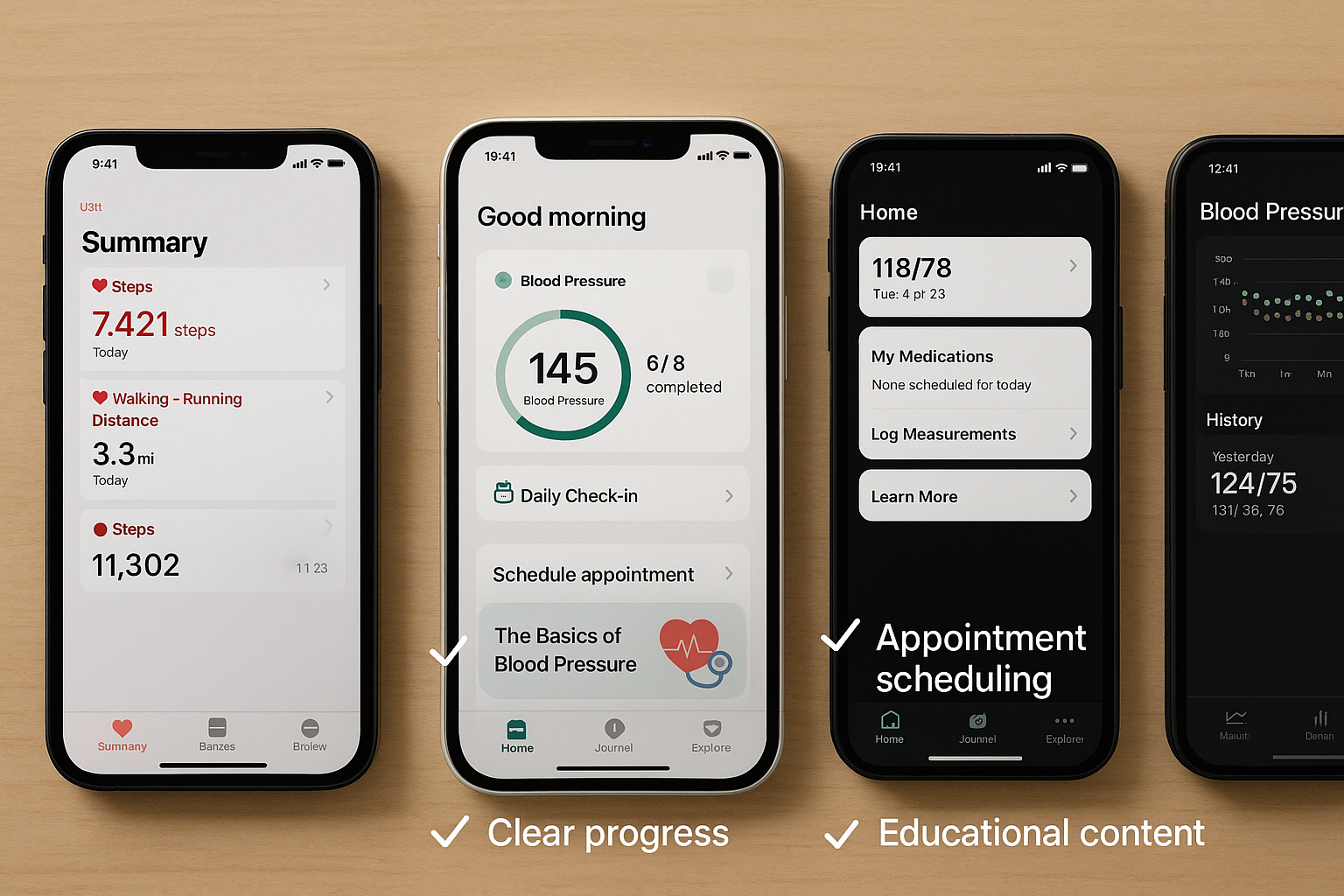
The digital health market has exploded over the past decade, transforming from a niche sector into a crowded, fiercely competitive landscape where thousands of apps, platforms, and solutions compete for attention, adoption, and market share. What began as isolated innovations in telemedicine, fitness tracking, and medication reminders has evolved into a comprehensive ecosystem encompassing remote patient monitoring, AI-powered diagnostics, digital therapeutics, health data platforms, wearable devices, virtual care delivery, and countless other categories—each with multiple competitors offering seemingly similar solutions.
This saturation creates significant challenges for digital health companies seeking to establish market presence and achieve sustainable growth. Investors have become more discerning after early enthusiasm led to numerous failures. Healthcare providers, overwhelmed by vendor pitches, exhibit justifiable skepticism about yet another “revolutionary” solution. Patients and consumers, inundated with app options, struggle to identify which tools genuinely serve their needs versus which simply join the digital clutter. Payers demand clear evidence of value before reimbursing digital solutions, making market access increasingly challenging.
Yet saturation also reflects the enormous opportunity digital health represents. The convergence of technological advancement, changing healthcare delivery models, pandemic-accelerated digital adoption, and growing emphasis on value-based care creates unprecedented opportunities for genuinely differentiated solutions that address real needs in innovative, effective ways. Companies that successfully differentiate their offerings can command premium positioning, attract investment, accelerate adoption, and build sustainable competitive advantages even in crowded categories.
This comprehensive guide explores proven strategies, emerging approaches, and critical considerations for differentiating digital health products in saturated markets. It examines what true differentiation means beyond superficial features, provides frameworks for identifying and articulating unique value propositions, explores various differentiation dimensions, and offers practical guidance for translating differentiation into market success.
Understanding the Digital Health Landscape
Effective differentiation begins with clear understanding of the competitive landscape, market dynamics, and stakeholder priorities shaping digital health adoption and success.
Market Saturation Realities
The numbers tell a striking story. Over 350,000 health and wellness apps are available across major app stores. Thousands of digital health companies compete across categories from mental health to chronic disease management to clinical decision support. Venture capital funding, while still substantial, has become more selective following years of high valuations and disappointing returns. Regulatory scrutiny has intensified as agencies work to ensure digital health products meet safety and efficacy standards.
This saturation means many categories have become commoditized, with multiple offerings providing similar basic functionality. Telemedicine platforms largely offer comparable video consultation capabilities. Medication reminder apps share similar core features. Fitness tracking solutions monitor similar metrics. In commoditized categories, differentiation becomes critical for competitive success rather than mere advantage.
However, saturation is uneven. Some categories remain underserved despite overall market crowding. Rural health access, certain chronic conditions, specific patient populations, healthcare provider workflow solutions, and particular clinical specialties offer opportunities where genuine innovation can address unmet needs without facing dozens of direct competitors.
Stakeholder Priorities and Decision Drivers
Digital health products must satisfy multiple stakeholders, each with distinct priorities influencing adoption and continued use. Patients and consumers prioritize ease of use, tangible health benefits, affordability or insurance coverage, privacy and data security, and integration with their lives and routines. They abandon products that feel complicated, deliver unclear value, or require excessive time and effort.
Healthcare providers seek evidence of clinical efficacy, seamless workflow integration, time savings rather than additional work, clear patient benefit justifying recommendation, and minimal liability risk. They resist solutions adding complexity to already overburdened practices.
Healthcare systems and hospitals evaluate interoperability with existing systems, scalability across patient populations, financial sustainability and ROI, regulatory compliance and risk management, and strategic alignment with organizational priorities. They demand clear business cases before committing to implementation.
Payers require clinical and economic outcomes evidence, cost savings or value demonstration, alignment with value-based care models, member satisfaction and engagement, and scalability across covered populations. They increasingly demand real-world evidence before reimbursement.
Employers sponsoring digital health for employees want measurable health improvements, healthcare cost reduction, employee satisfaction and utilization, privacy and regulatory compliance, and simple implementation and administration.
Differentiation strategies must address these diverse priorities, creating value across stakeholder groups rather than optimizing for single audiences while ignoring others.
Common Differentiation Failures
Many digital health companies fail to differentiate effectively, falling into common traps that limit market success. Feature-focused differentiation emphasizes technical capabilities over user benefits. Claiming “we use AI” or “we have the most features” fails to articulate why these matter to users. Features are means to ends; differentiation must communicate the ends.
“Me-too” positioning enters crowded categories with products offering marginally different versions of existing solutions without compelling differentiation. Slight variations in user interface, minor feature additions, or regional focus rarely suffice when dozens of alternatives exist.
Over-differentiation pursues novelty for its own sake, creating unique but impractical solutions addressing problems users don’t prioritize or introducing complexity that overwhelms usability. Innovation must serve genuine needs, not simply be different.
Unsustainable differentiation relies on advantages competitors can easily replicate. Temporary pricing discounts, promotional partnerships, or features without defensible intellectual property provide short-lived differentiation that collapses when competitors respond.
Unclear communication fails to articulate differentiation clearly and compellingly. Even genuinely differentiated products fail if target audiences don’t understand or appreciate what makes them unique. Differentiation exists in customer minds, not just product specifications.
Foundations of Effective Differentiation
Sustainable differentiation builds on strategic foundations ensuring uniqueness is meaningful, defensible, and valuable to target markets.
Deep Market Understanding and Unmet Needs
True differentiation addresses genuine unmet needs rather than creating solutions seeking problems. This requires comprehensive market understanding through extensive stakeholder research exploring frustrations with current solutions, workflow and process analysis identifying inefficiencies and pain points, competitive gap analysis revealing underserved needs, and emerging trend identification anticipating future requirements.
Ethnographic research observing how target users actually behave in natural environments reveals needs they cannot articulate in interviews or surveys. Job-to-be-done frameworks identify the fundamental “jobs” people hire products to accomplish, revealing deeper needs than surface feature requests. Continuous discovery maintains understanding of evolving needs as markets and user expectations change.
Clear Target Audience Definition
Attempting to serve everyone serves no one particularly well. Effective differentiation begins with precise target audience definition enabling tailored value propositions and concentrated resources. Broad categories like “people with diabetes” or “primary care physicians” encompass diverse segments with different needs, preferences, and priorities.
Segmentation might define targets by clinical characteristics (disease severity, comorbidities, treatment stage), behavioral patterns (engagement level, technology adoption, health literacy), demographic factors (age, socioeconomic status, geography), or psychographic attributes (health beliefs, motivation levels, lifestyle priorities).
Narrow initial targeting allows optimization for specific needs before expanding. Products excelling for particular segments often expand successfully into adjacent segments, while products trying to serve everyone from launch rarely excel for anyone.
Unique Value Proposition Development
Value propositions articulate the specific benefits target audiences receive and why your solution delivers these benefits better than alternatives. Effective value propositions are specific and concrete rather than vague claims, focused on user benefits rather than product features, differentiated from competitive offerings, credible and supportable with evidence, and relevant to target audience priorities.
The value proposition should answer four questions clearly: Who is it for? What problem does it solve? How does it solve that problem? Why is it better than alternatives? If these questions cannot be answered distinctly from competitors, differentiation is insufficient.
Testing value propositions with target audiences validates comprehension, credibility, relevance, and preference over alternatives. Iterative refinement based on feedback sharpens positioning before broader market introduction.
Defensible Competitive Advantages
Sustainable differentiation requires competitive advantages competitors cannot easily replicate. These might include proprietary technology or intellectual property, exclusive data or unique datasets, specialized expertise or talent, strategic partnerships or distribution channels, network effects increasing value with scale, brand equity and reputation, or regulatory advantages including approvals or certifications.
The more defensible the underlying advantages, the more sustainable the differentiation. Simple feature additions can be copied in months. Deep technology advantages, valuable proprietary datasets, or strong network effects provide years of defensibility.
Differentiation Dimensions and Strategies
Digital health products can differentiate along multiple dimensions. The most effective strategies often combine several dimensions creating multi-faceted differentiation more difficult for competitors to replicate.
Clinical Efficacy and Outcomes Evidence
In healthcare, demonstrating measurable clinical outcomes provides powerful differentiation. Digital therapeutics with FDA clearance or clinical trial evidence showing effectiveness differentiate from wellness apps making unsupported claims. Remote monitoring platforms demonstrating reduced hospitalizations or improved disease control command attention from healthcare systems and payers.
Generating outcomes evidence requires investment in rigorous clinical studies, real-world evidence collection, peer-reviewed publication, and regulatory approval processes. However, this investment creates significant competitive moats. Competitors without similar evidence face uphill battles establishing credibility with clinical audiences prioritizing evidence-based practice.
Outcomes evidence should address what stakeholders value—not just clinical measures but also quality of life, functional improvement, cost reduction, and utilization impacts. Economic outcomes demonstrating ROI particularly resonate with payers and health systems making coverage and adoption decisions.
Superior User Experience and Design
Outstanding user experience differentiates in markets where many solutions offer adequate functionality but mediocre usability. Intuitive interfaces requiring minimal learning, delightful interactions engaging users emotionally, seamless onboarding getting users to value quickly, personalization adapting to individual preferences and needs, and accessibility serving diverse abilities and preferences create competitive advantages through superior design.
Healthcare users, particularly patients managing chronic conditions and busy clinicians, have low tolerance for complexity. Solutions that feel effortless while delivering value earn preference and loyalty. This requires significant design investment, extensive user testing, and continuous refinement based on usage data and feedback.
Design differentiation extends beyond aesthetics to fundamental experience design—how workflows are structured, how information is presented, how the product adapts to context and user patterns. These deeper design decisions often matter more than surface-level interface polish.
Integration and Interoperability
Standalone solutions increasingly struggle as stakeholders demand integration with existing technology ecosystems. Digital health products that seamlessly integrate with electronic health records, connect with wearables and devices, sync with patient portals and health apps, share data with care teams securely, and plug into healthcare workflows differentiate through interoperability.
Integration requires significant technical investment and ongoing maintenance as connected systems evolve. However, deep integration creates sticky relationships difficult for competitors to displace. Once embedded in clinical workflows or connected to multiple user data sources, switching costs increase substantially.
Standards-based interoperability using FHIR, HL7, and other healthcare data standards provides broader connectivity than proprietary integrations. However, practical integration often requires custom work with specific systems given healthcare IT fragmentation.
Specialized Focus and Deep Expertise
While some digital health companies pursue broad platforms serving multiple conditions or populations, others differentiate through specialized focus developing deep expertise in particular diseases, patient populations, clinical specialties, or healthcare settings. This specialization enables tailored solutions addressing specific needs better than generalized products.
A diabetes management platform built by endocrinologists and diabetes educators for Type 1 diabetes patients demonstrates expertise and understanding that a general wellness app cannot match. A mental health solution designed specifically for adolescents addresses that population’s unique needs better than adult-focused alternatives. A clinical decision support tool built for emergency medicine matches that specialty’s workflow better than general-purpose tools.
Specialization risks limiting addressable market size but reduces competition and enables premium positioning based on superior fit for target segments. Many successful digital health companies begin with narrow specialization then expand into adjacent areas from positions of strength.
Care Model Innovation
Some digital health companies differentiate not just through technology but through innovative care delivery models enabled by technology. Hybrid models combining technology and human support, asynchronous care using messaging and monitoring rather than scheduled visits, team-based care coordinating multiple providers, or stepped care matching intervention intensity to need represent care model innovations differentiating from both traditional care and technology-only approaches.
Technology alone rarely transforms healthcare delivery. However, technology enabling innovative care models can fundamentally improve access, outcomes, experience, and economics. These integrated approaches often prove more defensible than pure technology plays as they combine technical and operational capabilities competitors cannot easily replicate.
Economic and Business Model Differentiation
How products are priced and delivered to market can provide significant differentiation. Innovative approaches include risk-sharing or outcomes-based pricing tying payment to results, subscription models providing predictable costs and ongoing value, bundled solutions integrating multiple services at attractive rates, freemium models offering basic functionality free with premium features for payment, or employer, payer, or health system sponsorship making solutions free to end users.
Business model innovation requires careful design ensuring sustainability while creating user and customer value. However, models aligned with stakeholder incentives and constraints can differentiate effectively even when underlying technology is similar to competitors.
Data, Analytics, and Insights
Proprietary data and advanced analytics capabilities differentiate through unique insights and predictive capabilities competitors cannot match. Large datasets from thousands or millions of users enable population health insights, machine learning model training, benchmark comparisons, and predictive algorithms that smaller competitors cannot replicate.
Data advantages compound over time as more users generate more data improving algorithms and insights attracting more users creating network effects. However, data-based differentiation requires solving cold-start problems attracting initial users before data advantages materialize.
Privacy-preserving approaches using techniques like federated learning enable data-driven differentiation while addressing growing privacy concerns. Transparency about data use and clear user benefit from data sharing builds trust essential for data collection.
Personalization and Adaptation
Generic one-size-fits-all solutions increasingly give way to personalized approaches adapting to individual characteristics, preferences, behaviors, and contexts. Personalization might involve tailored content matching user literacy and preferences, adaptive interventions adjusting based on engagement and progress, contextual delivery providing right information at right time, or predictive customization anticipating needs before users articulate them.
Effective personalization requires sophisticated data infrastructure, machine learning capabilities, and content/feature libraries enabling customization at scale. Surface-level personalization like name insertion provides little differentiation. Deep personalization fundamentally adapting experiences to individual needs creates meaningful advantages.
Regulatory Strategy and Compliance
In regulated environments, regulatory strategy itself can provide differentiation. FDA clearance for digital therapeutics, CE marking for European markets, specific certifications like SOC 2 or HITRUST, or clinical evidence supporting reimbursement all differentiate through regulatory achievements competitors lack.
However, regulatory differentiation has limited longevity as competitors eventually obtain similar approvals. It provides time advantages and credibility benefits rather than permanent moats. Still, in markets where regulatory barriers exist, being first with approval provides significant competitive windows.
Building and Communicating Differentiation
Possessing genuine differentiation is necessary but insufficient. Companies must build organizational capabilities supporting differentiation and communicate value propositions effectively to target audiences.
Product Development and Roadmap Management
Maintaining differentiation requires continuous innovation through product development. Roadmaps should prioritize initiatives strengthening differentiation rather than merely adding features competitors also offer. This means making strategic choices accepting gaps in functionality if those features don’t support differentiation while investing disproportionately where advantages can be built or extended.
User feedback must be filtered through differentiation strategy. Not every feature request deserves implementation. Those advancing differentiation merit prioritization. Those diluting unique positioning or diverting resources from core advantages should be declined despite user requests.
Innovation isn’t just new features but continuous optimization of existing capabilities. Incremental improvements in core differentiators compound over time, widening gaps between leaders and followers.
Go-to-Market Strategy Alignment
Go-to-market approaches should emphasize and amplify differentiation. Channel selection, sales approaches, marketing messages, and partnership strategies all should reinforce unique positioning. For products differentiated on clinical evidence, healthcare provider channels and peer-reviewed publication emphasis make sense. For consumer-differentiated solutions, direct-to-consumer marketing and app store optimization prove more relevant.
Sales teams need clear differentiation positioning, competitive battle cards, and objection handling scripts translating product advantages into customer benefits. Marketing campaigns should focus messaging on differentiators rather than attempting to be all things to all audiences.
Partnerships amplifying differentiation—with academic medical centers for research-differentiated products, with patient advocacy groups for patient-focused solutions, or with technology platforms for integration-differentiated offerings—extend reach and credibility.
Brand Building and Positioning
Strong brands encapsulate differentiation in memorable, meaningful ways. Brand development including naming, visual identity, messaging, and personality should reflect and reinforce unique positioning. Brands differentiated on innovation should feel cutting-edge. Those emphasizing accessibility should feel approachable. Clinical-focused brands should convey scientific rigor.
Consistent brand experience across touchpoints reinforces positioning. Website, product interface, customer service, marketing materials, and even employee communication should consistently express brand attributes supporting differentiation.
Brand-building requires sustained investment and patience. Brand equity accumulates slowly through repeated positive experiences and consistent messaging but provides durable competitive advantages. Strong brands command premium pricing, benefit from higher trust, and enjoy greater customer loyalty.
Thought Leadership and Content Marketing
Establishing thought leadership in areas supporting differentiation builds credibility and awareness. Companies differentiated on clinical outcomes should publish research, present at medical conferences, and educate healthcare professionals. Those differentiated on user experience might contribute to design publications, speak at UX conferences, and share design thinking publicly.
Content marketing addressing challenges related to differentiation attracts relevant audiences while demonstrating expertise. Blog posts, white papers, webinars, podcasts, and social media content should showcase unique knowledge and capabilities rather than generic healthcare content.
Authenticity matters in thought leadership. Genuine expertise and insight resonate. Superficial content marketing creates noise without differentiation. Quality over quantity principles apply—thoughtful, substantive contributions to conversations build credibility more effectively than high-volume generic content.
Customer Success and Retention
Acquiring customers is expensive in saturated markets. Retaining them through exceptional experience and demonstrated value proves more cost-effective. Customer success programs ensuring users achieve desired outcomes, proactive support anticipating and addressing issues, community building connecting users for peer support, and continuous value delivery through product improvements and new capabilities all contribute to retention.
Satisfied, successful customers provide testimonials, referrals, and case studies amplifying differentiation. Their success stories carry credibility that marketing claims cannot match. Investing in customer success generates compounding returns through retention, expansion, and advocacy.
Measuring and Maintaining Differentiation
Differentiation isn’t static. Markets evolve, competitors respond, and user expectations change. Sustaining differentiation requires continuous measurement, adaptation, and innovation.
Competitive Intelligence and Market Monitoring
Systematic competitive intelligence tracking competitor offerings, positioning, pricing, partnerships, funding, regulatory approvals, and market reception informs differentiation strategy. Understanding competitive moves enables proactive responses maintaining differentiation rather than reactive scrambling after advantages erode.
Market monitoring beyond direct competitors identifies emerging threats from adjacent categories, new entrants, or non-traditional competitors. Digital health disruption often comes from unexpected sources. Broad environmental scanning prevents blindness to threats from outside traditional competitive sets.
Regular competitive assessments benchmark product capabilities, user experience, market positioning, and customer satisfaction against competitors identifying gaps requiring attention and areas of strength worth emphasizing further.
Customer Feedback and Market Research
Ongoing customer feedback through surveys, interviews, usage analytics, and support interactions reveals whether differentiation remains meaningful and valued. Users voting with their choices—adopting, continuing, abandoning, or switching products—provide ultimate judgment on differentiation effectiveness.
Market research tracking awareness, perception, consideration, and preference quantifies differentiation in target audiences. Unprompted brand associations reveal whether positioning successfully establishes desired differentiation in customer minds. Purchase decision research identifies factors actually driving choices versus assumed differentiators.
This feedback should inform continuous adjustment of differentiation strategy and execution. What differentiated yesterday may not differentiate tomorrow as markets mature and expectations evolve.
Performance Metrics and Business Outcomes
Business metrics including customer acquisition cost, lifetime value, churn rate, market share trends, pricing power, and profitability reveal whether differentiation translates to commercial success. Effective differentiation should enable premium pricing, reduce customer acquisition costs through word-of-mouth and brand strength, lower churn through superior product-market fit, and ultimately drive profitable growth.
User engagement metrics including activation rates, feature usage, session frequency and duration, and milestone achievement indicate whether differentiation delivers user value. Products capturing attention and sustained engagement demonstrate meaningful differentiation from alternatives users abandon.
Clinical and economic outcomes for healthcare-focused products validate that differentiation translates to genuine health improvement and system value beyond marketing claims.
Special Considerations for Different Digital Health Categories
Different digital health categories face unique differentiation challenges and opportunities requiring adapted strategies.
Digital Therapeutics and Prescription Digital Products
Highly regulated digital therapeutics competing on clinical efficacy must prioritize evidence generation, regulatory approval, reimbursement establishment, and healthcare provider adoption. Differentiation through clinical validation, specific indication focus, and integration into treatment pathways proves essential. These products face higher barriers but also fewer direct competitors once regulatory approvals are obtained.
Consumer Health and Wellness Apps
Extremely crowded consumer categories like fitness, nutrition, and mental wellness demand differentiation through superior user experience, behavior change efficacy, personalization, community features, or innovative business models. Low barriers to entry mean features are quickly copied, requiring continuous innovation and brand building to maintain advantages.
Provider-Facing Clinical Tools
Solutions supporting healthcare providers differentiate through workflow integration, evidence-based recommendations, time savings, interoperability, and liability risk reduction. Provider skepticism requires strong clinical validation and pilot program success before broader adoption. Integration depth and switching costs once adopted provide defensibility.
Remote Monitoring and Chronic Disease Management
These solutions often differentiate through specific condition focus, clinical outcome evidence, care team integration, patient support services, and device/platform interoperability. Hybrid models combining technology with human coaching differentiate from technology-only approaches.
Healthcare Data and Analytics Platforms
Data platforms differentiate through data breadth and quality, analytical sophistication, interoperability, security and compliance, and insight actionability. Network effects and data accumulation over time create sustainable advantages once critical mass is achieved.
Emerging Differentiation Opportunities
Several emerging trends create new differentiation opportunities in maturing digital health markets.
AI and Machine Learning Application
While “AI-powered” has become overused marketing language, genuine AI capabilities providing superior predictions, personalization, or clinical insights offer meaningful differentiation. Natural language processing enabling conversational interfaces, computer vision analyzing images or video, or predictive models identifying at-risk patients before deterioration represent substantive advantages when properly implemented and validated.
Social Determinants of Health Integration
Digital health solutions integrating social determinants data, connecting users with community resources, addressing food insecurity or housing instability, or enabling culturally tailored care differentiate through holistic approaches recognizing health extends beyond medical interventions.
Voice and Conversational Interfaces
Voice-first or conversational user interfaces provide accessibility advantages particularly for older adults, those with visual impairments, or users preferring natural language interaction over app navigation. As voice technology matures, sophisticated conversational health assistants may differentiate through interaction model rather than just features.
Virtual and Augmented Reality Applications
Immersive technologies enabling VR-based exposure therapy, AR-guided procedures, virtual support groups, or pain management through immersive experiences represent frontier differentiation opportunities in categories where these technologies provide meaningful user benefit.
Decentralized and Blockchain-Based Solutions
Blockchain enabling patient-controlled health records, transparent clinical trials, or trusted health data sharing offers differentiation through novel approaches to persistent healthcare challenges around data ownership, privacy, and trust, though practical implementations remain limited.
Avoiding Differentiation Pitfalls
Several common mistakes undermine otherwise sound differentiation strategies.
Over-Engineering and Feature Bloat
Attempting to match every competitor feature while also maintaining unique capabilities leads to complex, unfocused products difficult to use and expensive to maintain. Disciplined feature prioritization maintaining clear differentiation trumps comprehensive but undifferentiated feature sets.
Premature Expansion
Successfully differentiating in narrow segments creates temptation to expand quickly into adjacent markets. However, premature expansion before establishing strong positions in initial segments dilutes resources and risks losing differentiation that attracted early success. Staged expansion from strength proves more successful than simultaneous multi-market approaches.
Insufficient Investment in Differentiation
Sustainable differentiation often requires significant investment—in clinical evidence generation, in superior design and user experience, in integration development, or in specialized expertise. Underfunding these initiatives in favor of broad marketing or rapid feature development produces weak differentiation easily overcome by better-funded competitors.
Communication Failure
Even strong differentiation fails if poorly communicated. Internal teams misunderstanding positioning create inconsistent external messaging. Marketing emphasizing wrong attributes wastes resources not advancing true differentiators. Unclear value propositions confuse rather than convince potential customers.
Static Positioning
Successful initial differentiation creates complacency. However, competitors respond, markets evolve, and yesterday’s differentiation becomes today’s table stakes. Continuous innovation sustaining and extending differentiation remains essential even after initial success.
Conclusion
Differentiating digital health products in saturated markets demands strategic clarity, authentic value creation, and disciplined execution. The proliferation of digital health solutions means superficial differentiation no longer suffices. Only meaningful differentiation addressing genuine needs in defensible, compelling ways enables sustainable competitive success.
True differentiation begins with deep market understanding identifying unmet needs and target segment priorities. It requires developing unique value propositions articulated clearly and demonstrated credibly. It manifests through various dimensions—clinical efficacy, user experience, integration, specialization, care models, business models, data capabilities, or personalization—often combining multiple dimensions for more defensible positioning.
Building differentiation demands organizational alignment around clear strategic choices, investing disproportionately in capabilities supporting differentiation while accepting gaps elsewhere. Communicating differentiation effectively through brands, thought leadership, go-to-market approaches, and customer success proves as important as possessing differentiation itself.
Sustaining differentiation requires continuous monitoring of competitive dynamics and user needs, measuring whether positioning remains meaningful and valued, and innovating continuously to maintain and extend advantages as markets mature.
The rewards for successful differentiation are substantial—premium pricing power, lower customer acquisition costs, reduced churn, stronger partnerships, easier fundraising, and ultimately, sustainable business success. Perhaps most importantly for digital health, meaningful differentiation ensures solutions genuinely serving user needs achieve adoption and impact rather than joining the thousands of digital health products launched with fanfare but ultimately abandoned unused.
The digital health market will continue evolving. Some categories will consolidate around category leaders. New categories will emerge creating fresh opportunities. Throughout these changes, the fundamental principle remains: differentiation distinguishing your solution through authentic value creation for clearly defined target audiences provides the surest path to sustainable success in competitive markets.
For digital health companies committed to the hard work of true differentiation rather than superficial positioning, significant opportunities remain to build successful businesses while advancing the industry’s ultimate mission—improving health outcomes, enhancing patient experiences, and creating more effective, accessible, affordable healthcare systems serving populations worldwide.
References
- Rock Health. (2024). Digital Health Funding and Trends Report. https://rockhealth.com/insights/
- IQVIA Institute. (2024). Digital Health Trends. https://www.iqvia.com/insights/the-iqvia-institute/reports/digital-health-trends-2024
- CB Insights. (2024). State of Digital Health Report. https://www.cbinsights.com/research/report/digital-health-trends/
- Stanford Medicine. (2024). Digital Health Research and Innovation. https://med.stanford.edu/digitalhealth.html
- U.S. Food and Drug Administration. (2024). Digital Health Center of Excellence. https://www.fda.gov/medical-devices/digital-health-center-excellence
- American Medical Association. (2024). Digital Health Implementation Playbook. https://www.ama-assn.org/practice-management/digital/digital-health-implementation-playbook
- Harvard Business Review. (2024). Digital Health Strategy and Innovation. https://hbr.org/topic/health-care-management
- Journal of Medical Internet Research. (2024). Digital Health Research. https://www.jmir.org/
- Digital Therapeutics Alliance. (2024). Industry Standards and Best Practices. https://dtxalliance.org/
- McKinsey & Company. (2024). Digital Health Consumer Adoption and Trends. https://www.mckinsey.com/industries/healthcare/our-insights
- Deloitte Insights. (2024). Digital Health Innovation and Market Analysis. https://www2.deloitte.com/us/en/insights/industry/health-care/digital-transformation-in-healthcare.html
- Nature Digital Medicine. (2024). Digital Health Science and Technology. https://www.nature.com/npjdigitalmed/